
Choosing the right floor for a warehouse, distribution center, or industrial facility is a major decision. It’s about more than a simple slab of concrete; it’s about designing and installing a complete foundation for your entire operation. So, what are commercial concrete floor systems?
They are highly engineered surfaces combining a reinforced concrete slab with specialized finishes and treatments designed to withstand the unique demands of industrial environments. A well-designed floor impacts everything from forklift safety to long-term maintenance costs, making it a critical investment in your facility’s durability and efficiency.
This guide breaks down everything you need to know, from the ground up, to make informed decisions about your next industrial flooring project.
System Type | Best For | Durability | Chemical Resistance | Est. Lifespan |
Polished Concrete | Retail, Showrooms, Light Warehouse | High (Abrasion) | Low | 20+ Years |
Epoxy Coatings | Manufacturing, Pharmaceutical | Medium-High | High | 5–10 Years |
Polyurethane / Urethane | Food & Bev, Cold Storage | Very High | Excellent | 10–15 Years |
Sealed Concrete | Logistics, General Storage | Moderate | Low-Medium |
Planning and Designing for Durability
A successful concrete floor starts long before the first truck arrives. Proper planning and design are non negotiable for creating commercial concrete floor systems that last.
Site Assessment and Custom Design
Every project is unique. The soil in Mississippi is different from the bedrock in Tennessee, and a chemical plant has different needs than a logistics hub. That’s why a one size fits all approach doesn’t work. A thorough site assessment involves geotechnical exploration to understand the soil’s properties and bearing capacity. This information fuels a custom design, tailoring the slab’s thickness, selecting the right mix from the different types of concrete, and reinforcement to handle specific loads and environmental conditions, preventing costly issues like settling and cracking down the road.
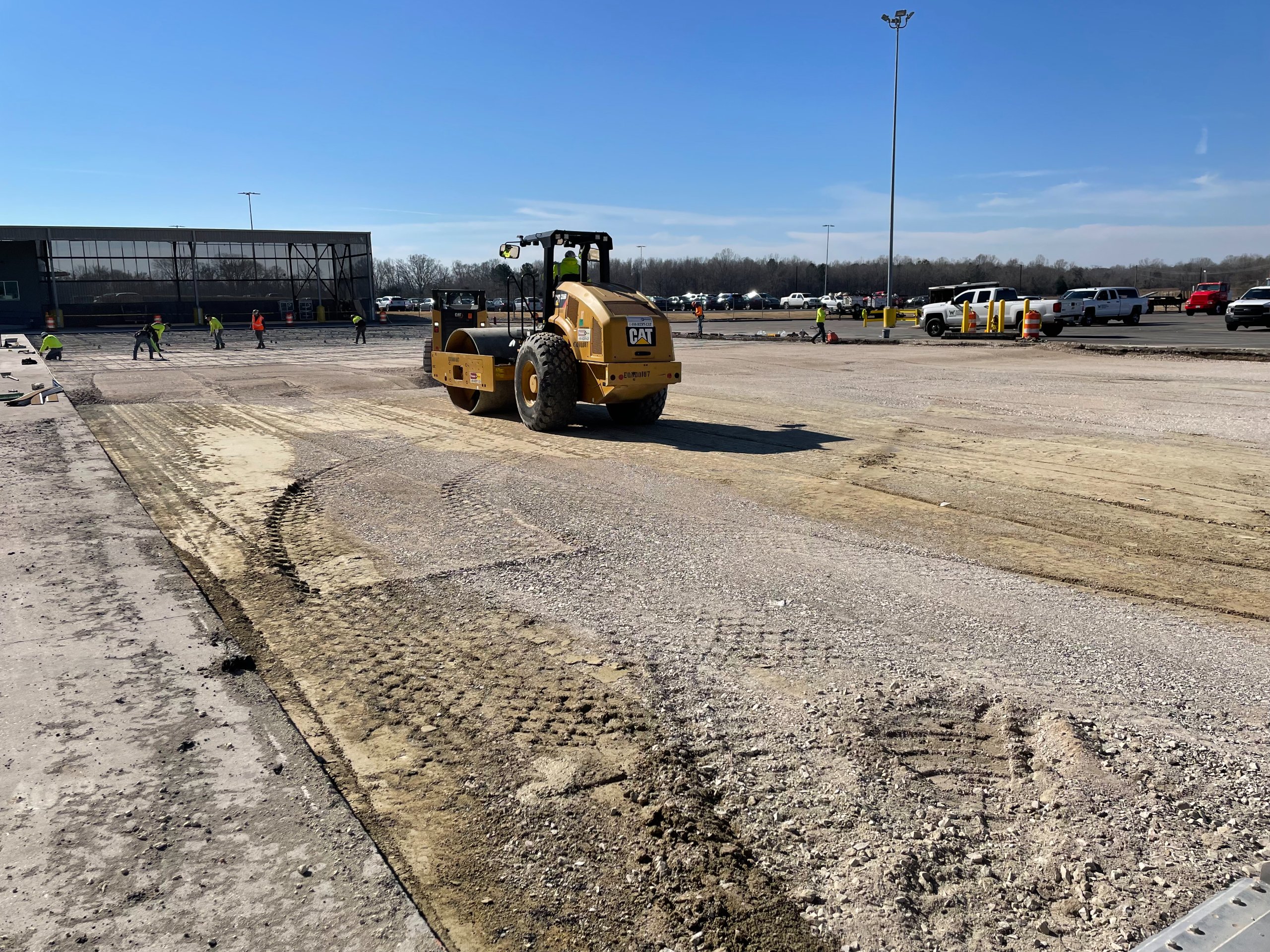
Subgrade Assessment and Compaction
The ground beneath your slab is its true foundation. If the subgrade is weak or unstable, even the best concrete will fail. Subgrade assessment involves testing the soil to quantify its strength. Following this, compaction is critical. By using rollers and tampers to densify the soil, we create a stable platform. For a step-by-step overview of what comes next, see the 6 steps to concrete slab installation. Most structural projects require the subgrade to be compacted to at least 95 percent of its maximum density, a standard that significantly reduces the risk of future settlement.
For the complete subgrade-to-slab workflow including soil stabilization, gravel subbase design, vapor barriers, joint placement, and thickness selection (4–12+ inches), see our 2026 slab on grade construction guide.
Load Bearing Capacity
How much weight can your floor handle? That’s its load bearing capacity. This crucial metric determines if a slab can support everything from heavy machinery and loaded storage racks to constant forklift traffic. Capacity depends on concrete strength, slab thickness, reinforcement, and subgrade support. A well designed 6 inch reinforced slab on a stable subgrade can easily support thousands of pounds per forklift wheel and the weight of fully loaded trucks. Exceeding this capacity can lead to catastrophic cracks or punch through failures.
Reinforcement with Rebar or Mesh
Concrete is incredibly strong under compression (squeezing) but weak in tension (pulling or bending). In fact, its tensile strength is only about 10 percent of its compressive strength. To compensate, steel reinforcement like rebar (reinforcing bars) or welded wire mesh is embedded in the concrete. The steel carries the tensile forces, controlling cracks and dramatically increasing the slab’s load bearing capacity. This combination of concrete and steel is what allows commercial concrete floor systems to withstand the demanding loads of an industrial environment.
The Art and Science of the Concrete Slab

Once the foundation is prepared, the focus shifts to the slab itself. Proper installation and finishing techniques are essential for performance.
Control Joints for Crack Management
Concrete naturally shrinks as it cures, which creates stress and leads to cracking. Control joints, also known as contraction joints, are planned grooves cut into the slab to create a weakened plane. This encourages cracks to form in a straight, predictable line within the joint instead of randomly across the floor. A common rule is to space joints (in feet) no more than two to three times the slab’s thickness (in inches). For a 4 inch slab, this means joints every 8 to 12 feet, cut to a depth of about 25 percent of the slab thickness.
Curing Techniques for Maximum Strength
Curing is the process of maintaining proper moisture and temperature in new concrete to ensure it hardens correctly. This allows the cement to hydrate fully, which is the chemical reaction that gives concrete its strength. A well cured slab can be up to 50 percent stronger than an uncured one. Common techniques include applying a liquid curing compound, covering the slab with waterproof sheets, or keeping it wet. Proper curing for at least seven days is a low cost way to improve surface hardness, reduce dusting, and achieve the intended durability. Learn more about how long concrete takes to dry and why waiting matters.
Advanced Installation: Robotics and Real-Time Monitoring
Achieving high F-number tolerances is now frequently assisted by technology:
Laser Screeds: Automated leveling ensures precision within millimeters.
IoT Sensors: Embedded sensors now monitor real-time humidity and temperature during the curing process, alerting contractors via smartphone if the slab is drying too quickly.
Robotic Finishing: Autonomous power trowels provide a more consistent finish than manual operation, critical for “Superflat” requirements.
Slab Flatness Tolerance (F Numbers)
How flat and level is your floor? In an industrial setting, this matters immensely. Slab flatness and levelness are measured using the F number system. Ff measures flatness (waviness over short distances) and Fl measures levelness (over long distances). Higher numbers mean a flatter floor. A typical warehouse might specify Ff 35 / Fl 25, while facilities with very tall, narrow aisle forklifts require super flat floors with Ff numbers of 50 or higher. Achieving these tolerances requires skilled finishing and prevents equipment wear and safety issues. See our guide to concrete flatwork construction.
Industry Standards for Floor Flatness (ACI 117)
Floor Classification | Typical Use Case | Ff (Flatness) | Fl (Levelness) |
Conventional | General Office / Retail | 20 | 15 |
Moderately Flat | Standard Warehouse | 25 | 20 |
Flat | High-Traffic Logistics | 35 | 25 |
Very Flat | Narrow Aisle / Robotics | 45 | 35 |
Superflat | Automated Storage (ASRS) | 60+ | 50+ |
High Performance Finishes and Coatings
The surface of your concrete is where the action happens. Applying the right finish or coating is key to creating robust commercial concrete floor systems that meet specific operational needs.
Polished Concrete
Polished concrete is a finish achieved by mechanically grinding the slab with progressively finer diamond abrasives. This process, combined with a liquid chemical densifier, creates an incredibly dense, hard, and smooth surface with a satin to high gloss shine. The densifier penetrates the concrete to fill pores and increase surface hardness, making the floor dust proof and highly resistant to abrasion. Because the shine comes from the concrete itself, there is no coating to peel or flake. Plus, polished concrete can increase ambient light reflectivity by 30 percent, potentially lowering energy costs.
Epoxy Floor Coatings
An epoxy floor coating is a two part resin system that chemically bonds to the concrete, creating a rigid, durable, and seamless plastic surface. High grade industrial epoxies often have compressive strengths exceeding 10,000 psi, making them stronger than the underlying concrete. This makes them ideal for warehouses, manufacturing plants, and garages where they can withstand heavy traffic and abrasion. A properly installed epoxy floor can last five to ten years in high traffic settings before needing a refresh.
Polyurethane Flooring Systems
Similar to epoxy, polyurethane flooring is a resinous system known for its exceptional durability, flexibility, and resistance to chemicals and thermal shock. Urethane cement, a common type, is troweled on as a heavy duty layer perfect for food and beverage plants. Its standout feature is thermal shock resistance. A thick polyurethane floor can withstand sudden temperature swings, like a steam cleaning at 250°F on a cold floor, without cracking or delaminating. They are also UV stable, meaning they won’t yellow when exposed to sunlight.
Sealers and Densifiers
These two treatments work together to protect and strengthen concrete.
Densifiers are penetrating liquids that react chemically with the concrete to harden and densify the surface from within. This reduces dusting and increases abrasion resistance.
Sealers are protective coatings that block water, oil, and other contaminants from soaking into the concrete. They can be film forming (like acrylics) or penetrating (like silanes) and are essential for preventing stains and damage.
For a high performance industrial floor, a contractor might densify the slab during polishing and then apply a final sealer for extra stain protection. If you need expert advice on the right finishes for your facility, the team at Wright Construction Company can help.
Solving Common Flooring Challenges

Even the best designed floors face challenges. Understanding these issues is key to preventing and solving them.
Chemical Resistance
Concrete is naturally porous, and without protection, aggressive chemicals like acids, oils, or solvents can soak in and cause deterioration. Resinous coatings like epoxy and polyurethane form a seamless, impermeable shield that protects the slab. The level of protection needed depends on the specific chemicals and exposure time. Flooring manufacturers provide chemical resistance charts to help select a system that can handle the environment, which is crucial for chemical warehouses and food processing plants.
Slip Resistance
A floor’s slip resistance is a critical safety measure, quantified by its coefficient of friction (COF). Slips and falls are a leading cause of workplace injuries, costing employers over $10 billion annually. A dynamic COF of 0.42 or higher is the current industry benchmark for level floors that may get wet. While a highly polished floor can be slick when wet, slip resistance can be enhanced by adding fine aggregates to coatings, using textured finishes, or applying anti slip conditioners.
Thermal Shock Resistance
Thermal shock occurs when a floor experiences rapid, extreme temperature changes, causing it to crack or delaminate. This is common in commercial kitchens or breweries where hot water is used to wash cold floors. As mentioned, polyurethane cement systems are a leading solution because their coefficient of expansion is similar to concrete, allowing them to handle these stresses without failing. Proper material selection is vital in any facility with hot washdowns or freezers.
Moisture Mitigation and Vapor Control
Moisture moving up through a concrete slab can cause huge problems, leading to bubbling coatings, failed adhesives, and mold growth. Moisture related failures are one of the costliest issues in commercial buildings. A vapor barrier (plastic sheeting) installed under the slab is the first line of defense. For existing slabs, topical moisture mitigation systems, usually epoxy based, can be applied to seal the concrete and block vapor transmission. Testing for moisture before installing any flooring is an essential step. Moisture can be introduced at placement too. See how rain affects concrete paving jobs.
Sweating Slab Syndrome
This phenomenon occurs when a cool concrete slab meets warm, humid air, causing condensation to form on the surface. The floor appears to “sweat,” creating a dangerously slippery, invisible film of water. This is common in warehouses in humid regions like the Southeast, especially when large loading dock doors are opened on a muggy morning. Solutions include improving air circulation with large fans, using dehumidifiers, and ensuring floor surfaces have adequate texture to maintain grip even when damp.
Specialized Applications and Long Term Value
Bringing all these elements together results in commercial concrete floor systems tailored for specific, demanding uses.
Warehouse and Loading Dock Applications
Floors in warehouses and at loading docks are among the most abused. They must handle heavy, constant forklift traffic, concentrated loads from racking, and impacts at dock bays. Before you finalize specs, learn why concrete is ideal for industrial loading docks. These applications typically require:
Thick, reinforced slabs (6 inches or more) to handle loads.
Armored joints at dock edges to prevent chipping.
High strength concrete and surface hardeners to resist abrasion.
Strict flatness tolerances for safe high stack forklift operation.
Proper drainage design to mitigate issues and slip resistant finishes at exterior dock areas.
Building these specialized commercial concrete floor systems requires expertise in everything from subgrade prep to advanced finishing techniques.
Sustainability and LEED Impact
Modern commercial concrete floor systems are a primary driver for LEED (Leadership in Energy and Environmental Design) v4.1 certification.
Low-Carbon Concrete: Mention the use of fly ash or slag to reduce the carbon footprint of the mix.
Reflectivity: Polished concrete reduces the need for overhead lighting (Artificial Light Reduction).
Thermal Mass: Concrete slabs act as a “thermal battery,” stabilizing indoor temperatures and reducing HVAC loads.
Maintenance Cost Lifecycle
When choosing commercial concrete floor systems, it’s important to look beyond the initial installation price. The maintenance cost lifecycle considers the total cost of ownership, including routine upkeep, repairs, and eventual replacement. A polished concrete floor may have a higher upfront cost but offers a very low lifecycle cost because it doesn’t require waxing or recoating. In contrast, an epoxy floor might need to be recoated every five to ten years in an industrial setting. Analyzing the long term costs helps you select a solution that provides the best overall value for your facility. For exterior aprons and hardstands, proactive preventative maintenance for concrete pavement can further extend service life.
At Wright Construction Company, we specialize in designing and building industrial concrete solutions across the Southeast. From new warehouse slabs in Nashville to complex repairs in Birmingham, we deliver durable, high performance floors. Contact us today to discuss your project needs.
Frequently Asked Questions
1. What is the most durable commercial concrete floor system?
For overall durability in heavy traffic environments, a properly installed polished concrete floor is a top contender due to its incredible density and abrasion resistance. For environments with extreme chemical exposure or thermal shock, a heavy duty polyurethane cement system is often the most resilient choice.
2. How do you improve an existing concrete floor?
Existing floors can be dramatically improved. If the slab is in good structural condition, it can be ground and polished to create a new, dense surface. Alternatively, it can be shot blasted and coated with an epoxy or polyurethane system to add chemical and wear resistance.
3. Are polished concrete floors slippery?
When clean and dry, polished concrete meets or exceeds industry standards for slip resistance. However, like any smooth floor, it can become slippery when wet. For areas prone to moisture, slip resistant conditioners or coatings can be applied to enhance safety without sacrificing the polished look.
4. How long do commercial concrete floor systems last?
The structural concrete slab itself can last for the life of the building (50 plus years). The lifespan of the finish depends on the type and the usage. A polished concrete surface can last for decades with minimal maintenance, while an epoxy coating in a heavy use area may need to be refreshed every five to ten years.
5. Why is subgrade compaction so important for industrial floors?
The subgrade provides the support for the entire slab and all the weight on top of it. If the ground underneath is not properly compacted, it can settle over time under heavy loads, causing the concrete slab to crack, sink, and fail. Proper compaction is arguably the most critical step for ensuring the long term performance of commercial concrete floor systems.
6. Can you install new flooring on a new (green) concrete slab?
Typically, you must wait for a new concrete slab to cure and dry sufficiently before applying coatings or other flooring, which can take months. However, specialized moisture mitigation systems can be applied to green concrete to block moisture vapor, allowing for much faster installation of the final floor finish.