
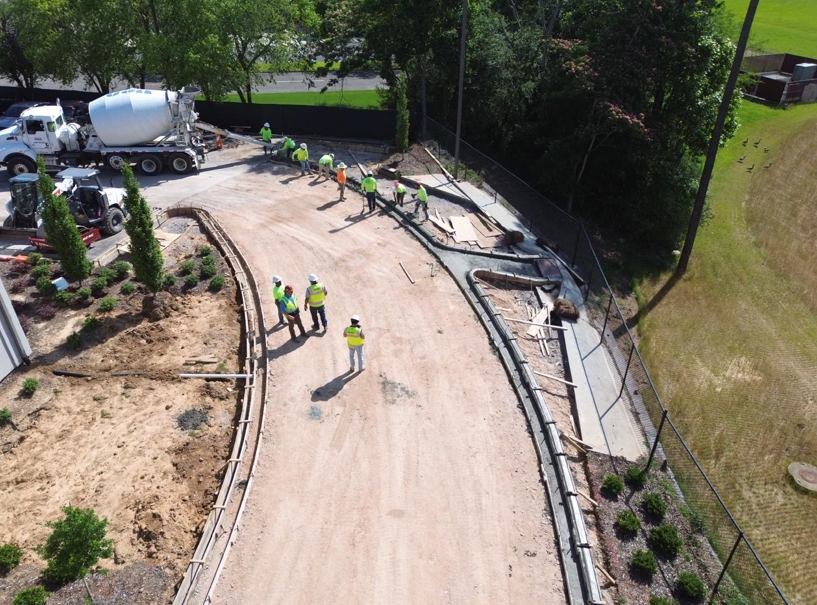
Structural concrete is the literal foundation and framework of our commercial and industrial world. From towering office buildings and sprawling warehouses to the bridges we cross every day, this blend of cement, aggregate, and water provides unparalleled strength and durability. But turning a blueprint into a load bearing structure requires a specialist: a structural concrete contractor. While paving companies handle horizontal surfaces, structural concrete requires specialized engineering to manage tensile and compressive loads. It demands deep engineering knowledge, precision execution, and a commitment to safety. Choosing the right partner is one of the most critical decisions for any commercial construction project.
How to Choose and Vet a Structural Concrete Contractor
Selecting the right structural concrete contractor is about more than finding the lowest bid. It’s about securing a reliable partner who can deliver a safe, durable, and compliant structure. Proper vetting protects your investment and project timeline.
Check Licensing and Insurance
First, verify that the contractor holds all necessary state and local licenses for the work they perform. More importantly, ask for a certificate of insurance. They should carry, at a minimum, General Liability, Workers’ Compensation, and Auto Liability insurance. According to the Occupational Safety and Health Administration (OSHA), the construction industry is one of the most dangerous, so ensuring your contractor is fully insured protects you from liability in case of an accident.
Review Past Projects and References
A reputable structural concrete contractor will have a robust portfolio of completed projects similar to yours. Ask to see examples and speak with previous clients. Inquire about their experience regarding:
Adherence to the project schedule and budget
Quality of the finished work
Communication and problem solving skills
Site safety and cleanliness
Assess Safety Records
A contractor’s commitment to safety is a direct reflection of their professionalism and operational discipline. Ask for their Experience Modification Rate (EMR). An EMR below 1.0 indicates a better than average safety record. A company that prioritizes safety protocols is less likely to experience project delays due to accidents.
Evaluate Team Experience and Capabilities
Understand the team that will be working on your project. How experienced are their project managers and field superintendents? Do they have the right equipment and manpower to handle the scale of your job? A firm like Wright Construction Company has a dedicated team with extensive experience in complex commercial and industrial concrete projects. If your structural scope interfaces with exterior flatwork, review our guide to concrete flatwork construction.
Expert Tip: The “Rule of Three” for Vetting Always verify the EMR (Experience Modification Rate). In 2026, a rating of 1.0 is the industry average. If a contractor’s EMR is above 1.2, many insurance providers and GCs will disqualify them from high-stakes structural projects. Aim for a partner with an EMR of 0.85 or lower.
Core Scopes Handled by a Structural Concrete Contractor
A qualified structural concrete contractor manages projects that form the skeleton of a building or facility. Their work is what gives a structure its strength and stability. While scopes vary, they typically include several core services.
Foundations and Footings
This is the base of everything. An expert contractor can execute various foundation types, including shallow footings, deep foundations with pile caps, and complex mat slabs designed to support immense loads. For a step-by-step overview, see the concrete foundation building process.
Slabs and Decks
Structural slabs are critical for floors and roofs. This category includes:
Slab on Grade: Concrete poured directly onto prepared ground, common in warehouses and industrial facilities.
Post Tension Slabs: A method where steel cables are tensioned after the concrete cures, allowing for thinner slabs and longer spans.
Slab on Metal Deck: Poured over corrugated metal decking, this system is common in multistory buildings.
Vertical Concrete Elements
Beyond the floor, a structural concrete contractor builds the vertical components that transfer loads to the foundation. This includes structural walls, columns, beams, and elevator pits. Tilt panel construction, where large concrete wall panels are cast on site and tilted into place, is another specialized service that requires expertise.
Market and Bidding Expectations
Understanding the current market helps set realistic expectations for your project. Lead times for a qualified structural concrete contractor can range from weeks to months, depending on their backlog and your project’s complexity. Material costs, particularly for cement and reinforcing steel, can be volatile, impacting bid pricing. It’s a fact that change orders can account for 5% to 10% of a project’s total cost, so a clear and complete bid is essential. Early coordination to mitigate drainage issues can also prevent costly rework once foundations and slabs are in place.
When you engage a contractor, discuss their current capacity and how your project fits into their schedule. An overextended contractor can lead to delays and quality control issues.
How to Request and Compare Bids Effectively
To get accurate and comparable bids, you must provide all potential contractors with a comprehensive bid package. This should include complete structural drawings, geotechnical reports, and a detailed scope of work.
When bids come in, don’t just look at the final number. Create a comparison sheet and analyze the following:
Inclusions: Does the bid cover all specified work, including rebar, formwork, finishing, and quality control testing?
Exclusions: What is explicitly not included? Common exclusions might be excavation, utility work, or permits.
Assumptions and Clarifications: Note any assumptions the contractor made, as these could lead to change orders later.
Timeline: Does the proposed schedule align with your project’s needs?
A lower price might be tempting, but it could signal that a contractor missed part of the scope or is using subpar materials.
Permits and Inspections for Structural Concrete Work
Structural concrete work is subject to rigorous oversight. While the General Contractor typically coordinates all permits, your structural concrete contractor is responsible for ensuring their work passes all required inspections. The International Building Code (IBC) provides the minimum standards for most jurisdictions in the United States. For accessible routes, ramps, and parking that interface with structural scopes, review how ADA compliance affects paving projects.
Key inspection points often include:
Footing and Foundation: Verification of soil conditions and footing dimensions before placing concrete.
Reinforcing Steel: An inspector must check the size, spacing, and placement of all rebar and post tensioning cables before any concrete pour.
Concrete Testing: On site tests, like the slump test for consistency and the casting of cylinders for strength testing, are standard quality control measures. The final strength of concrete is measured in pounds per square inch (PSI), with most commercial projects requiring a specific PSI value confirmed by these tests.
Top 8 Structural Concrete Contractor Firms
Selecting the right partner for complex infrastructure projects requires a deep dive into industry reputation and proven technical capabilities. The following list highlights the top eight structural concrete contractors recognized for their precision, safety standards, and consistent ability to execute large-scale commercial builds. These firms represent the industry gold standard, offering the specialized expertise necessary to ensure the long-term foundational integrity of any structure.
1. Wright Construction Company
Since 1946, Wright Construction Company has delivered turnkey structural concrete for large commercial, institutional, and infrastructure programs. From complex foundations and pile caps to tilt-up panels, shear walls, and high-tolerance slabs, the firm executes at industrial scale with the precision owners demand.

HQ & reach: Fort Myers, FL, serving the Southwest region
Core strengths: complex foundations and pile caps; tilt-up; vertical elements and shear walls; high-tolerance slabs for institutional and industrial facilities
Specializations:
EducationIndustrialWarehouse/DistributionMunicipalHealthcareTransportationPublic WorksInfrastructureCommercialGovernmentCivilStatus: Verified and Active Contractor
2. Hall Concrete Contracting
Hall Concrete Contracting powers massive industrial builds across the Southeast with cast-in-place expertise. Their crews deliver multi-story post-tensioned frames, deep foundations, and high-tolerance slabs-on-grade, pairing engineering rigor with schedule reliability for both vertical and horizontal scopes.

HQ & reach: Charlotte, NC, serving the Southeast region
Core strengths: large-scale cast-in-place; multi-story post-tensioned frames; deep foundations; high-tolerance SOG; dependable delivery across vertical and horizontal work
Specializations:
Commercial OfficeIndustrialManufacturingMixed-UseParking StructuresHealthcareHospitalityHigh-RisePublic WorksStatus: Verified | Active Contractor
3. Cecils Concrete
Cecils Concrete brings reinforced solutions to commercial and industrial footprints along the Carolina coast. The team delivers heavy-duty slabs, engineered foundations, and complex vertical elements, coordinating large pours and site-specific designs for high-traffic retail, warehouse, and distribution developments.

HQ & reach: Conway, South Carolina, serving coastal regions
Core strengths: reinforced foundations; heavy-duty slabs; complex vertical components; large-scale pours; site-specific engineering for throughput-intensive facilities
Specializations:
CommercialIndustrialWarehouseDistributionRetailMunicipalInfrastructureStructuralFoundationsSlabsVerticalEngineeringStatus: Verified | Active Commercial Contractor
4. Rushing Concrete
Rushing Concrete serves as a go-to commercial subcontractor for heavy structural packages in the Southeast. They manage complex foundations, high-finish slabs, multi-story frames, and specialized tilt-up, streamlining the handoff from sitework to vertical to keep industrial and warehouse programs moving.

HQ & reach: Trussville, AL, serving the Southeast
Core strengths: complex foundations; high-tolerance slabs; multi-story frames; tilt-up delivery; integrated sitework-to-vertical sequencing
Specializations:
IndustrialWarehouseDistributionCommercialOfficeMunicipalRetailInfrastructureHealthcareEducationPublic WorksStatus: Verified | Active contractor
5. Parrot Structural Services
Parrot Structural Services focuses on restoring and reinforcing concrete structures that keep critical facilities running. Through carbon fiber systems, shotcrete, and foundation stabilization, they return load-bearing capacity to aging industrial assets with engineered solutions tailored to long-term performance.

HQ & reach: Madison, AL, serving the Southeast
Core strengths: structural repair and reinforcement; carbon fiber strengthening; shotcrete; complex foundation stabilization for critical infrastructure
Specializations:
IndustrialInfrastructureMunicipalWater TreatmentCommercialStructural RepairRetrofittingBridgesShotcreteGroutingStatus: Verified Active Structural Contractor
6. Gregory Construction
Gregory Construction brings self-performed structural concrete to industrial and mission-critical builds across the Southeast. Leveraging 3D BIM and GPS-integrated equipment, they place high-precision foundations, frames, and tilt-up systems to exacting tolerances while maintaining a disciplined safety culture.

HQ & reach: Columbus, MS, serving the Southeast region
Core strengths: high-precision foundations and frames; tilt-up systems; BIM- and GPS-enabled layout; infrastructure-scale execution
Specializations:
IndustrialMission CriticalMunicipalInfrastructureWarehouseDistributionAviationAirfieldBridge ConstructionCommercialStatus: Active Contractor, TCA Member.
7. MSE Building
MSE Building integrates advanced coordination with field execution to deliver structural concrete for heavy industry. From specialty and manufacturing foundations to complex schedules, the firm provides turnkey packages that keep large Southeast programs on track.

HQ & reach: Birmingham, Alabama, serving the Southeast region
Core strengths: heavy industrial foundations; precision specialty pours; digital coordination; turnkey industrial delivery
Specializations:
ManufacturingIndustrialWarehouse/DistributionMunicipalHealthcareOfficePublic WorksInfrastructureData CentersEducationStatus: Verified | Active contractor
8. Phillips Contracting
Phillips Contracting approaches structural concrete as the backbone of broader commercial delivery. Their teams place footers and slabs-on-grade with robust site preparation, supporting municipal and industrial facilities across the Tri-State with durable, schedule-conscious execution.

HQ & reach: Beaver, PA, serving the Tri-State
Core strengths: footers and slabs-on-grade; integrated site development; municipal and industrial facility support
Specializations:
CommercialMunicipalIndustrialSite DevelopmentInfrastructureInstitutionalEducationOfficeHealthcareWarehouseDistributionStatus: Verified | Active Contractor
2026 Structural Concrete Cost Estimates
Project Type | Average Cost (per Sq. Ft.) | Key Cost Drivers |
Slab on Grade | $6.50 – $12.00 | Thickness, reinforcement (mesh vs. rebar) |
Structural Foundations | $12.00 – $22.00 | Soil conditions, depth, PSF requirements |
Post-Tension Slabs | $18.00 – $30.00 | Cable tensioning labor, engineering specs |
High-Rise Vertical | $25.00 – $45.00+ | Pumping height, specialized formwork |
Working Successfully with Your Structural Concrete Contractor
A successful project relies on a collaborative partnership. The work begins long before the first concrete truck arrives.
Preconstruction to Pour
During the preconstruction phase, your contractor should be an active partner. They will submit shop drawings for reinforcing steel, mix designs for the concrete, and a detailed plan for executing the work. The mix design is critical, as the water to cement ratio directly impacts the concrete’s ultimate strength and durability. A pre pour meeting is essential to coordinate logistics, confirm the inspection schedule, and review safety protocols with all involved trades.
Communication and Quality Control
Establish a clear communication plan from the start. Regular progress meetings and daily reports keep everyone informed. Your contractor should have a dedicated Quality Control (QC) manager who oversees all aspects of the installation, from formwork alignment to the concrete curing process. Proper curing is a chemical process, not just drying, and is vital for the concrete to reach its designed strength. Learn more about how long concrete takes to cure and why waiting matters. For reliable project management and clear communication, consider reaching out to the experts at Wright Construction Company.
2026 Industry Trends: What’s Changing in Structural Concrete
Low-Carbon “Green” Concrete: In 2026, many contractors are moving toward calcined clay and biochar additives to meet new federal sustainability mandates.
Digital Twin Integration: Top firms now use 3D BIM (Building Information Modeling) to “clash-detect” rebar and utility lines before a single yard of concrete is poured.
Robotic Finishing: To combat labor shortages, leading contractors are deploying autonomous laser-screed robots to achieve ultra-high floor flatness ($F_F$) and levelness ($F_L$) ratings.
Conclusion: Key Takeaways and Next Steps
Choosing the right structural concrete contractor is a foundational step for a successful construction project. Remember to thoroughly vet potential partners by checking their licenses, safety records, and past performance. Provide a detailed scope of work to receive accurate bids and look beyond the price to find true value. By fostering a collaborative relationship built on clear communication, you can ensure your project’s structural elements are built to last. After turnover, plan preventative maintenance for concrete pavement to protect adjacent flatwork and site concrete over the long term.
Ready to start your next commercial or industrial project? Contact the experienced team at Wright Construction Company to discuss your structural concrete needs.
Frequently Asked Questions
What is the difference between a concrete contractor and a structural concrete contractor?
A general concrete contractor typically handles non structural flatwork like sidewalks, driveways, or patios. A structural concrete contractor specializes in load bearing concrete elements like foundations, columns, beams, and suspended slabs that are critical to a building’s integrity. The technical knowledge and quality control required are significantly higher.
How much does structural concrete work cost?
The cost varies widely based on project complexity, geographic location, material costs, and labor rates. It is typically priced per cubic yard of concrete placed, which includes costs for labor, formwork, reinforcing steel, and equipment. The best way to determine cost is to get detailed bids from qualified contractors based on your project’s engineering plans.
What kind of insurance should a structural concrete contractor have?
They should carry comprehensive insurance, including General Liability (typically $1 million per occurrence or more), Workers’ Compensation as required by the state, and Commercial Auto Liability. For larger projects, they may also need to carry an Umbrella or Excess Liability policy.
How long does it take for structural concrete to cure and gain strength?
Concrete begins to harden within hours, but the curing process takes time. It typically reaches about 70% of its specified compressive strength in 7 days and is considered fully cured, reaching 99% of its ultimate strength, in 28 days. Curing time can be affected by the mix design, temperature, and humidity.
Why is reinforcing steel (rebar) so important in structural concrete?
Concrete has excellent compressive strength (resists squeezing) but poor tensile strength (resists pulling apart). Steel reinforcement, or rebar, has high tensile strength. By embedding rebar in the concrete, you create a composite material, reinforced concrete, that can withstand both compressive and tensile forces, making it ideal for building structures.
Can a structural concrete contractor work in any weather?
Experienced contractors can place concrete in a wide range of conditions, but extreme weather presents challenges. Extreme heat can cause concrete to set too quickly, while freezing temperatures can stop the curing process and permanently damage the concrete. Contractors use various techniques, such as admixtures, insulating blankets, and heating, to mitigate weather effects.