
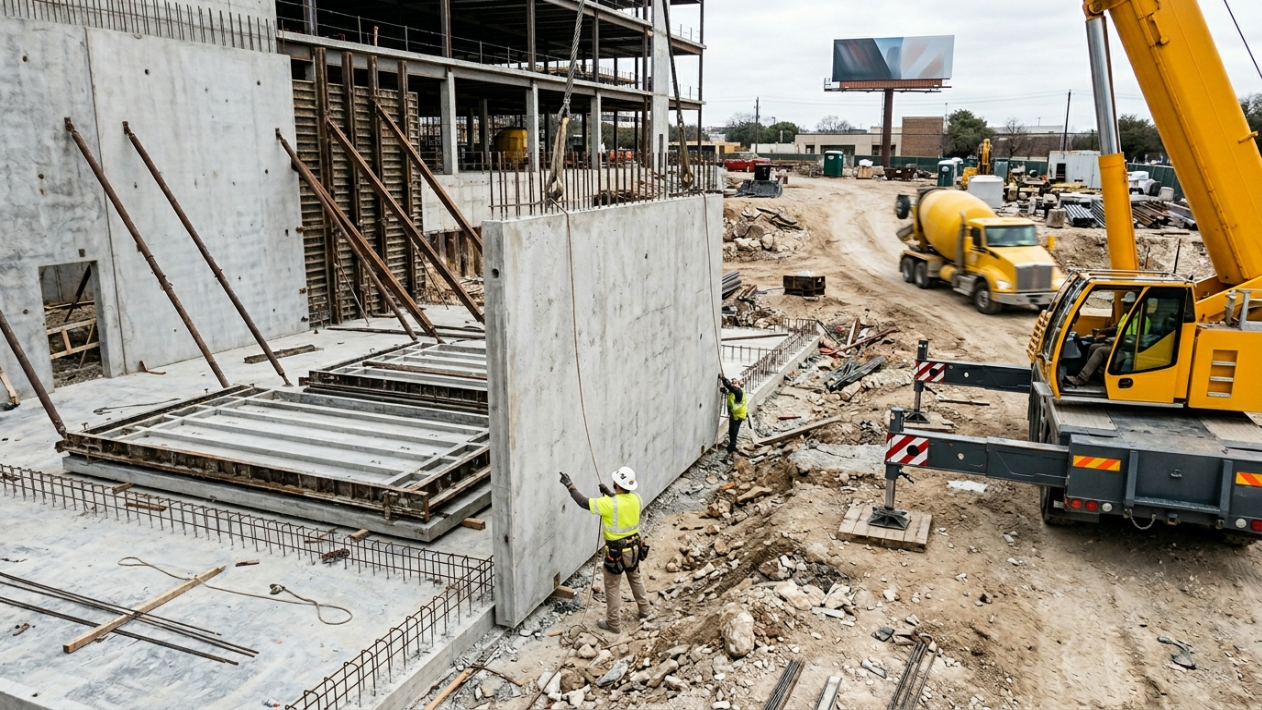
Tilt up concrete construction is a modern and highly efficient method for building large structures, from sprawling warehouses to local schools. It involves casting massive concrete wall panels directly on the job site and then, as the name suggests, tilting them up into their final vertical position with a crane. As a leader in commercial concrete projects, we at Wright Construction Company frequently use this technique to deliver durable, cost effective buildings on an accelerated schedule.
This guide covers everything you need to know about tilt up concrete construction, from the step by step process and its history to the significant benefits and cost factors. Whether you’re a property owner, developer, or contractor, this is your complete resource for understanding one of the most popular building methods today.
Feature | Tilt-Up Construction | Metal Buildings (PEMB) | CMU / Masonry |
Primary Use | Warehouses, Retail, Offices | Storage, Workshops | Small Commercial, Retail |
Construction Speed | Fastest (Parallel Tasks) | Fast | Slow (Linear Tasks) |
Durability | High (Fire/Impact Resistant) | Medium (Dents/Corrosion) | High |
Energy Efficiency | High (Thermal Mass) | Low (Requires heavy insulation) | Medium |
Average Cost (2026) | $45 – $65 per sq. ft.* | $35 – $55 per sq. ft. | $55 – $80 per sq. ft. |
What Is Tilt Up Concrete Construction?
Tilt up concrete construction, also known as tilt wall or tilt slab construction, is a building method where concrete wall panels are cast horizontally on the ground, often using the building’s own floor slab as a casting bed. These panels aren’t just solid concrete; they can include integrated features like window openings, door frames, insulation, and electrical conduits cast directly into them.
Once the concrete cures and gains sufficient strength, a large crane lifts, or “tilts,” each panel into its vertical position. The panels are then braced temporarily until the roof structure is installed, which permanently locks them together. This on site precasting method is incredibly popular for low rise commercial buildings. In fact, over 650 million square feet of buildings in the U.S. are constructed using this method each year.
The Tilt Up Concrete Construction Process
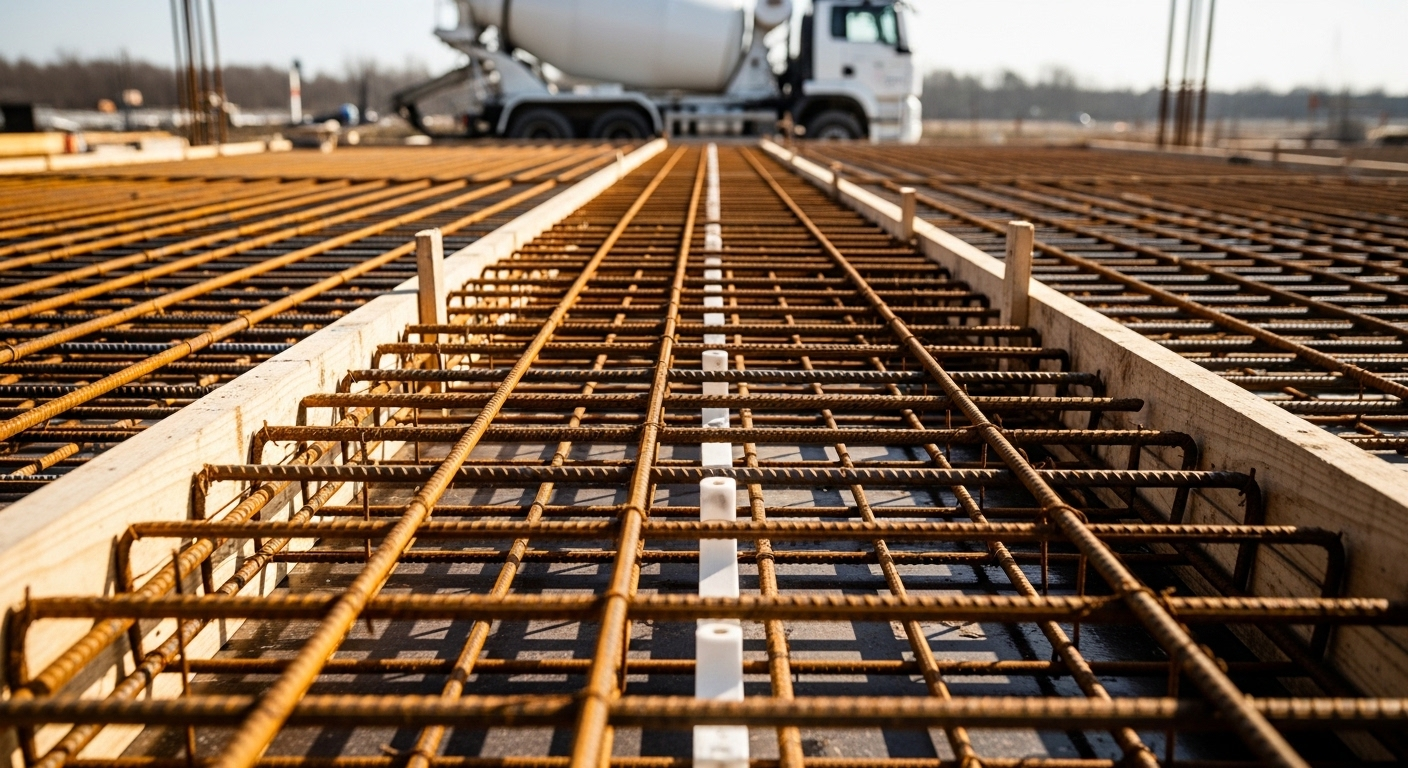
The magic of tilt up construction lies in its straightforward, repeatable process. Here’s how a flat patch of ground becomes a standing building.
1. Site and Slab Preparation
The process begins with preparing the building’s foundation and floor slab; if you’re new to this, review our concrete foundation building process. A perfectly flat and stable casting surface is crucial, so the building’s floor is often poured first to serve as the casting bed for the walls (see our concrete slab installation guide for what that entails).
2. Forming the Panels
Using lumber or metal forms, workers outline the shape of each wall panel on the slab. Inside these forms, they place a grid of reinforcing steel (rebar) along with any embedded items like lifting inserts, window frames, and electrical boxes.
3. Pouring and Curing
Concrete is poured into the forms and finished. The panels then need time to cure, which is the chemical process of hardening and gaining strength. This usually takes about four to seven days, depending on the concrete mix (see the different types of concrete we use) and weather, until the panels reach a strength of at least 3,000 psi.
4. Lifting and Setting the Panels
This is the most dramatic phase. A large crane is rigged to the lifting inserts embedded in the panel. The crane operator carefully lifts the massive panel, which can weigh anywhere from 50 to 150 tons, from its horizontal position to a vertical one. The panel is then precisely set onto the foundation and secured with temporary metal braces.
5. Finishing the Structure
Once all panels are up and braced, they are welded or bolted together and connected to the steel roof structure. This ties the entire building together into a solid, stable shell. With the walls and roof in place, interior construction can begin in a weather protected environment.
A Brief History of This Innovative Method
Though it feels like a modern marvel, tilt up construction has roots stretching back more than a century.
The Early 1900s: Engineer Robert H. Aiken pioneered the method around 1905, seeking a more efficient way to build with concrete. He patented his “tilt slab” technique, demonstrating its viability with early projects like a factory on his farm.
World War II: The method gained traction during the 1940s when the military needed to build barracks and warehouses quickly. Its speed and reduced need for skilled labor were perfect for the wartime economy.
Post War Boom: In the 1950s, tilt up construction became a go to for the explosion of commercial and industrial buildings across America. Innovations in ready mix concrete and crane technology made it even more practical.
Modern Era: The founding of the Tilt Up Concrete Association (TCA) in 1986 standardized best practices. Since then, advancements like insulated sandwich panels and computer aided design have solidified tilt up concrete construction as a mainstream, highly respected building technique. Between 1995 and 2000 alone, the use of this method grew by 111%.
The Key Advantages of Tilt Up Concrete Construction
So, why has this building method become so popular? The benefits are clear, combining speed, cost savings, and durability in one package.
Fast Track Project Delivery
Tilt up construction is perfectly suited for fast track delivery, a strategy where construction begins before the design is fully complete. The building shell can be erected with incredible speed, often 30% to 50% faster than with traditional masonry or cast in place methods. For a 50,000 square foot building, this can shave weeks off the schedule. This allows the building to be “dried in” sooner, so interior trades can get to work earlier, which ultimately means the owner can occupy the space and start generating revenue faster.
Significant Cost Containment
For the right project, typically large buildings with simple footprints, tilt up offers significant savings.
Lower Labor Costs: The process requires a smaller, more specialized crew, reducing the total hours of labor needed compared to laying thousands of bricks or blocks. This is a primary driver of the 10% to 15% cost savings often seen over masonry.
Material Efficiency: Casting on site eliminates factory overhead and expensive transportation costs associated with precast panels. Using the floor slab as a casting bed also dramatically reduces the need for expensive vertical formwork.
Reduced Financing Costs: A shorter construction schedule means less time paying interest on construction loans.
Lower Long Term Operating Costs
The savings don’t stop when construction is finished. Tilt up buildings are often cheaper to own and operate over their lifetime. The thick concrete walls provide excellent thermal mass, which helps regulate indoor temperatures and reduce heating and cooling costs. Adding insulation can reduce HVAC energy use by 7% to 12% annually. Furthermore, the durable concrete is resistant to fire, pests, and impact damage, leading to lower maintenance expenses and potentially lower insurance premiums over the building’s 50 plus year service life.
Pro Tip: Because tilt-up panels are essentially massive firewalls, many insurance providers offer lower premiums for these structures compared to steel-frame buildings. In 2026, where insurance costs are rising, this 10–15% reduction in annual premiums can significantly improve your ROI.
Design Flexibility and Architectural Versatility

Forget the idea that all tilt up buildings are plain gray boxes. Modern tilt up construction offers incredible design flexibility.
Finishes and Textures: Form liners can be used to imprint textures like stone, brick, or wood grain onto the concrete surface.
Veneers: Thin brick, stone, or other materials can be embedded directly into the panels during casting, achieving a high end look without the high cost of a separate trade.
Shapes and Openings: Panels can be cast in custom shapes with large window and door openings, allowing for architecturally interesting designs with plenty of natural light. Even curved panels are now possible, pushing the creative boundaries of the method.
Unmatched Durability and Resiliency
Tilt up structures are built to last. The steel reinforced concrete panels are incredibly strong, offering superior resistance to high winds, impacts, and fire. A standard concrete panel can provide a 2 to 4 hour fire rating, helping to contain fires and protect assets. Following lessons learned from past earthquakes, modern building codes now mandate robust connections between walls and roofing systems, making today’s tilt up buildings highly resilient in seismic zones as well.
Cost Factors Influencing Your 2026 Budget
While tilt-up remains the most cost-effective method for large footprints, three variables are currently driving budgets in 2026:
Crane Mobilization: Fuel surcharges and crane availability mean planning the “Lift Day” 6-8 weeks in advance is critical for cost containment.
Eco-Friendly Concrete Blends: Many 2026 projects now utilize low-carbon concrete mixes to meet LEED requirements, which can slightly increase material costs but offer tax incentives.
Integrated Technology: We are seeing an increase in “Smart Panels” featuring embedded IoT sensors for long-term structural health monitoring.
Is Tilt-Up Right for Your Site?
Before committing to this method, ensure your site meets these “Big Three” requirements:
Casting Space: Do you have enough “floor” area to cast all your walls? (Or enough “waste” slab area outside the footprint?)
Floor Load Capacity: Can your slab handle the weight of a 100-ton crane without cracking?
Areal Clearance: Are there overhead power lines or neighboring structures that would obstruct a crane’s 360-degree rotation?
Practical Project Considerations
While the benefits are compelling, a successful tilt up concrete construction project depends on careful planning around a few key factors—and on the same structural fundamentals that govern any reinforced concrete element: load analysis, reinforcement detailing, lifting stresses on the panel, and ACI 318 compliance. For the underlying design framework, see our structural concrete design considerations guide. Below are the project-level factors specific to tilt-up.
Site Size and Equipment Requirements
Tilt up construction works best on sites with ample space. You need enough open area to cast the panels, which is often an area equal to the building’s footprint. You also need clear access for a large mobile crane. These cranes are essential for lifting panels that can weigh over 100 tons. On a tight or congested urban site, there may not be enough room to maneuver the crane or tilt the panels, making other methods a better fit.
How Weather Impacts the Schedule
The process is somewhat weather dependent.
Rain: Heavy rain can delay concrete pours and prevent crane operations (see how rain affects concrete paving jobs).
Temperature: Extreme cold slows down the concrete curing process, while extreme heat can cause it to cure too quickly, risking cracks.
Wind: High winds are the biggest safety concern during the lifting phase. Lifts must be postponed if wind speeds exceed safe limits, typically around 20 to 25 mph.
Panel Curing Time
After a panel is poured, it needs time to cure and gain strength before it can be lifted. This period typically lasts four to seven days; here’s how long concrete takes to dry and why waiting matters. Crews will test concrete samples to confirm the panel has reached the required compressive strength (usually 3,000 psi or more) to ensure it can support its own weight during the lift without cracking.
Safety Guidelines for a Secure Job Site
Safety is paramount when dealing with such massive elements. The industry follows strict guidelines from organizations like the Tilt Up Concrete Association (TCA) and the Occupational Safety and Health Administration (OSHA). Key safety protocols include:
Engineered Lift and Bracing Plans: Every lift is carefully planned by an engineer.
Qualified Personnel: Only certified crane operators, riggers, and signalers are involved in the lift.
Controlled Access Zones: The area around the lift is kept clear of all non essential personnel.
Secure Temporary Bracing: Panels are immediately secured with steel braces that remain in place until the permanent roof structure is installed.
Tilt Up Construction vs. Other Methods
How does tilt up stack up against other common building techniques?
Tilt Up vs. Cast In Place Concrete
Cast in place concrete involves building vertical forms and pouring walls in their final position. While versatile, it requires extensive, costly formwork and is much slower. Tilt up construction eliminates most of this vertical formwork, speeding up the wall construction phase by 30% to 50% and resulting in a higher quality surface finish since panels are finished horizontally.
Tilt Up vs. Masonry Construction
Masonry (using concrete blocks or bricks) is a traditional, labor intensive method. A small crew can erect hundreds of square feet of tilt up wall in a fraction of the time it would take a large team of masons to lay the same area. For buildings over 20,000 square feet, tilt up is often 10% to 15% cheaper than masonry due to savings in time and labor. While masonry offers a classic look, modern tilt up can replicate it with embedded thin brick at a lower cost.
When Is Tilt Up Not the Right Fit?
Tilt up construction is a fantastic solution, but it’s not perfect for every project. It may not be the best choice for:
Very Small Buildings: For projects under 10,000 square feet, the cost of mobilizing a large crane may not be economical.
Highly Constrained Sites: A lack of space for casting panels and operating a crane can make tilt up impractical.
High Rise Structures: While possible for a few stories, tilt up is most efficient for low rise buildings. Steel or cast in place frames are better suited for taller structures.
Complex or Irregular Shapes: Buildings with highly ornate or non linear walls may be too complex to form efficiently with large panels.
Common Applications of Tilt Up Construction
You can find tilt up buildings in almost any commercial or industrial park. Its combination of speed, cost, and durability makes it ideal for:
Warehouses and Distribution Centers: The most common application, perfect for large, open spaces.
Retail Buildings: Many big box stores and shopping centers use tilt up for their robust, tall walls.
Office Buildings: Low rise corporate campuses and office parks benefit from its design flexibility and professional finishes.
Schools and Institutional Facilities: Its durability and speed make it a great choice for schools, churches, and community centers.
Manufacturing and Industrial Plants: The strong concrete walls are ideal for heavy duty industrial environments.
For your next commercial or industrial project, consider the powerful advantages of tilt up concrete construction. As you vet teams, here’s what separates good concrete contractors from average contractors. The expert team at Wright Construction Company has the experience to guide you through the process and determine if this method is the right fit for your needs.
Frequently Asked Questions
What is the main benefit of tilt up concrete construction?
The primary benefits are speed and cost efficiency. Building shells can be erected much faster than with traditional methods, leading to shorter project timelines and significant labor cost savings, especially on large scale projects.
How long do tilt up buildings last?
With proper maintenance, a tilt up concrete building can easily have a service life of 50 years or more. The steel reinforced concrete panels are extremely durable and resistant to weather, fire, and pests.
Is tilt up construction expensive?
No, it is generally one of the most cost effective methods for large, low rise commercial buildings. By reducing labor needs, minimizing material waste, and shortening the construction schedule, it can deliver a finished structure for a lower cost per square foot compared to masonry or precast concrete.
Can you use tilt up construction for multi story buildings?
Yes, tilt up is commonly used for buildings up to three stories tall. While structures of five stories or more are possible with specialized engineering, it is most economical and practical for low rise applications.
How does tilt up construction perform in earthquakes or hurricanes?
Modern tilt up buildings are designed to be very resilient. Following updated building codes, panels are securely connected to the foundation and roof diaphragm, enabling them to perform exceptionally well against the high wind loads of hurricanes and the seismic forces of earthquakes.
Is tilt up an environmentally friendly option?
Yes, it can be. Concrete has excellent thermal mass, which improves energy efficiency. The on site casting process also reduces transportation emissions compared to factory precast panels, and there is generally less material waste than in wood frame or other construction types.
Ready to see if tilt up concrete construction is the right choice for your next project? Contact Wright Construction Company today to discuss your needs with our team of concrete experts.