

TL;DR
Choosing a commercial paving contractor is a six-figure decision that affects your property for 15 to 30 years. The nine criteria that matter most: self-performed work (not subcontracted), multi-trade capability, DOT prequalification, lifecycle maintenance programs, ADA compliance expertise, proven scale, itemized bids, regional presence, and phased scheduling around your operations. This guide breaks down each one with specific questions to ask and red flags to watch for.
Quick Answer: How Do You Choose the Right Commercial Paving Contractor?
A commercial paving contractor should self-perform asphalt work, have experience with projects similar to yours, provide itemized bids, understand ADA requirements, offer long-term pavement maintenance, and coordinate related services such as drainage and concrete repairs. Commercial property owners should prioritize qualifications, lifecycle value, and project management rather than selecting the lowest bid.
Commercial Paving Contractor Checklist
|
Requirement |
Why It Matters |
|---|---|
|
Self-performed paving |
Better quality control |
|
Commercial references |
Proven experience |
|
DOT prequalification |
Independent credential |
|
ADA expertise |
Reduces legal risk |
|
Itemized proposal |
Easier comparison |
|
Multi-trade capability |
Fewer subcontractors |
|
Maintenance program |
Longer pavement life |
|
Local office |
Better warranty support |
|
Phased scheduling |
Less business disruption |
Why Most “How to Hire a Paver” Guides Fall Short
The standard advice for picking a commercial paving contractor amounts to “check their license, get three bids, and read reviews.” That’s table stakes. It tells you nothing about whether a contractor can actually handle a 100,000 square foot distribution center lot, coordinate drainage and ADA work alongside the paving, or show up two years later when you need crack sealing.
Commercial paving projects typically cost $3.00 to $8.00 per square foot before site preparation, which adds another $1.50 to $5.00 per square foot. For a mid-size parking lot, you’re looking at a six-figure investment that will either serve your property for decades or start failing within a few years. The contractor you choose determines which outcome you get.
The nine criteria below come from patterns in how the best commercial paving firms operate, what facility managers consistently report as pain points, and the red flags that experienced property owners learn to spot (usually the hard way).
Request a project assessment from Wright Construction to get started on your commercial paving project.
At-a-Glance: Commercial Paving Contractor Evaluation Framework
|
Evaluation Criteria |
What to Look For |
Key Question to Ask |
Red Flag |
|---|---|---|---|
|
Self-Performance |
Contractor’s own crews do the paving |
“Will your crews do the paving, or will you sub it out?” |
Vague answers about “our network of partners” |
|
Multi-Trade Capability |
Concrete, drainage, ADA, and paving under one contract |
“Do you handle curb, drainage, and ADA work in-house?” |
Separate subcontracts for every adjacent trade |
|
DOT Prequalification |
State DOT credentials, current bonding, verified insurance |
“Are you prequalified with any state DOT?” |
Can’t provide insurance certificates directly from insurer |
|
Lifecycle Maintenance |
Sealcoating, crack sealing, overlays, and long-term plans |
“What does your maintenance program look like?” |
Only talks about the initial install |
|
ADA Compliance |
Builds ADA upgrades into the paving scope |
“Does your bid include ADA upgrades, or are those excluded?” |
ADA listed as “allowance” or excluded entirely |
|
Scale and Complexity |
Equipment fleet, references at similar project size |
“Can you share 2 to 5 year old projects at this scale?” |
All references are residential or small-lot work |
|
Itemized Bids |
Asphalt mix, lift thickness, compaction targets, full scope |
“Can you itemize base depth, mix type, and compaction specs?” |
Lump-sum number with no detail |
|
Regional Presence |
Established offices, local material supplier relationships |
“How long have you operated in this market?” |
Rented equipment, no permanent office |
|
Phased Scheduling |
Plans around your business operations |
“How will you phase this to minimize our downtime?” |
No discussion of operational impact |
What Does a Commercial Paving Contractor Do?
Many property owners assume every asphalt contractor offers the same services, but commercial paving contractors manage much more than laying asphalt.
Typical services include:
-
New parking lot construction
-
Parking lot resurfacing
-
Full-depth asphalt replacement
-
Milling and overlays
-
Concrete curb replacement
-
Sidewalk installation
-
ADA accessibility upgrades
-
Drainage improvements
-
Pavement markings
-
Sealcoating
-
Crack sealing
-
Pothole repair
Unlike residential paving companies, commercial contractors coordinate multiple trades, permitting requirements, and long-term pavement maintenance.
1. They Self-Perform the Paving Work
Best for: Ensuring quality control and schedule reliability on your project.
Over the past few decades, many general contractors have shifted to a pure project management model. They coordinate subcontractors rather than employing their own crews. It keeps overhead low, but it creates real problems on commercial paving projects.
When a contractor self-performs, their superintendent controls the crew directly. Quality issues get corrected on the spot. Schedule adjustments happen in real time. Change orders don’t require a separate negotiation with a third-party sub.
The numbers back this up. Among the Top 50 paving contractors in the United States, 48 self-perform at least 50% of their work. That’s 96%. Self-performance isn’t a bonus feature at the top of the industry. It’s the baseline.
What to ask: “Will your own crews be doing the paving work, or will you subcontract it?” A confident contractor gives a direct answer. If you hear phrases like “we work with a trusted network of subcontractors,” that’s a polite way of saying they don’t have paving crews.
Why it matters practically: When problems surface on subcontracted work, resolution requires negotiation between your GC and the sub. Everyone points fingers. Schedules slip. Small adjustments that an in-house crew handles in an hour require new sub quotes, scheduling delays, and markup at multiple levels.
Wright Construction self-performs across every trade it offers, including asphalt paving, concrete, site work, and ADA remediation, using its own crews.
2. They Cover Multiple Trades Under One Contract
Best for: Eliminating coordination headaches on projects that involve more than just asphalt.
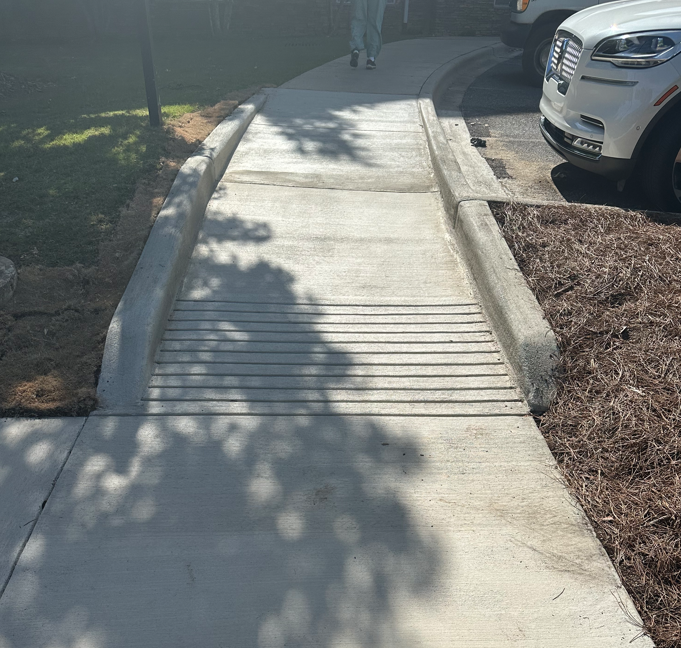
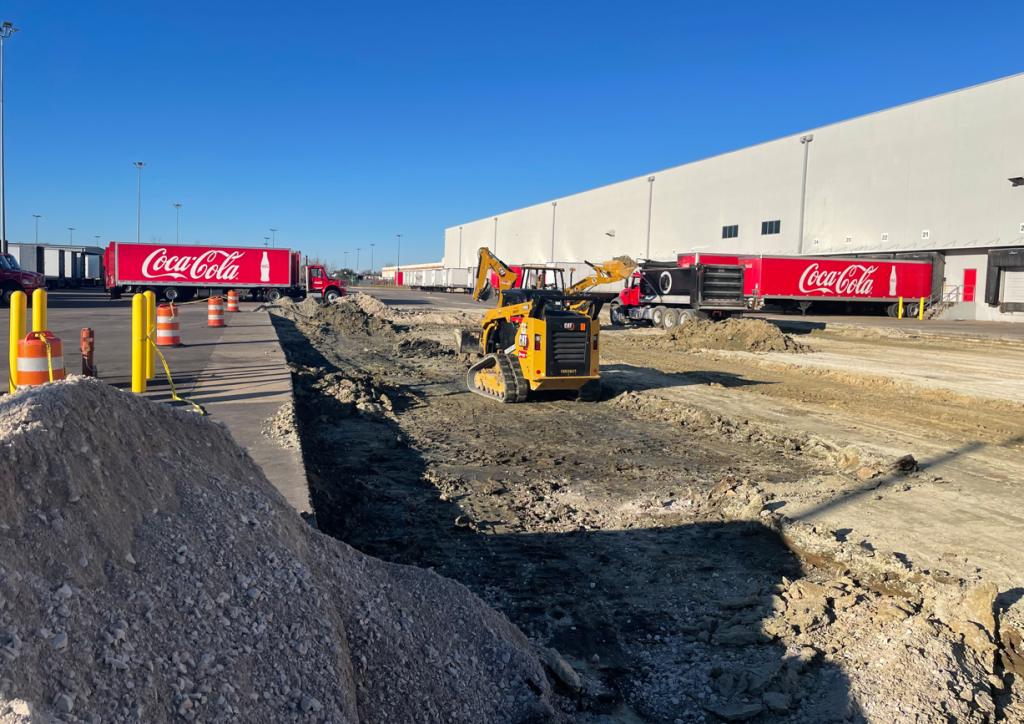
A parking lot is not just asphalt. It’s asphalt interfacing with concrete curbs, drainage inlets, dumpster pads, ADA ramps, bollards, dock aprons, sidewalks, light pole bases, and storm pipe. When the scope crosses trade boundaries, a paving-only contractor either ignores the adjacent work or asks you to hire separate subcontractors for every piece.
This creates three problems that practitioners on construction forums consistently identify:
-
Schedule conflicts. You coordinate arrival windows for multiple crews who all need access to overlapping areas.
-
Finger-pointing on defects. When something fails at the boundary between two scopes, each contractor blames the other.
-
Extended downtime. Different crews need access at different times, stretching your project timeline and keeping portions of your lot unusable longer than necessary.
For a shopping center repaving that also needs curb replacement, ADA ramp upgrades, and drainage inlet repairs, a multi-trade commercial paving contractor handles everything under one contract with one point of contact. This is the model that Wright Construction operates: structural concrete, asphalt paving, concrete paving, site development services, and ADA remediation all delivered by self-perform crews.
Commercial Paving Contractor vs Asphalt Contractor
|
Commercial Paving Contractor |
Asphalt Contractor |
|---|---|
|
Handles complete site work |
Often paving only |
|
ADA compliance |
Usually limited |
|
Drainage coordination |
Sometimes outsourced |
|
Commercial project management |
Small-scale projects |
|
Heavy-duty pavement design |
Residential focus |
|
Multi-trade crews |
Limited services |
3. They Have DOT Prequalification or Equivalent State Credentials
Best for: Verifying financial stability and construction quality through independent state vetting.
State Department of Transportation prequalification means a contractor has been evaluated for financial stability, equipment standards, and proven execution on public-sector work. It’s not a license you buy. It’s a credential you earn through demonstrated performance and financial review.
Experienced property managers on Reddit and in industry forums point out that DOT prequalification is one of the few contractor credentials that actually means something, because the state independently verifies the contractor’s capabilities rather than the contractor simply claiming them.
What to verify:
-
State licensing. Check with the licensing board directly, not just the contractor’s word.
-
Bonding. Confirm the bond is current and sufficient for your project size.
-
Insurance. Request certificates of insurance directly from the insurer. If a contractor can’t (or won’t) provide a certificate straight from the insurer, that’s a red flag.
Wright Construction holds Tennessee DOT prequalification, an independent verification of financial stability and construction capability that most local paving companies don’t pursue.
4. They Offer Lifecycle Maintenance, Not Just Installation
Best for: Protecting your pavement investment over 15 to 30 years, not just the first 12 months.
For most commercial properties, asphalt paving lasts between 15 and 30 years. The exact lifespan depends on traffic volume, environmental conditions, and maintenance quality. But without proper care, most asphalt pavements lose 10% of their structural integrity within 10 years, and after 20 years, they will have lost 45% of their integrity. Deferred maintenance compounds at roughly 7% annually, meaning every year you delay, the eventual repair costs more.
If a contractor doesn’t talk about long-term care, it’s a sign they’re focused only on the initial install. You want a partner who thinks in years, not weeks.
Cost benchmarks for maintenance planning:
-
Sealcoating: $0.14 to $0.25 per square foot. For a 20,000 sq ft parking lot, that’s $2,800 to $5,000, applied every 2 to 4 years.
-
Crack sealing: Done annually or biannually, this is one of the highest-ROI maintenance activities.
-
Striping and markings: $0.20 to $1.00 per linear foot.
-
Overlays: Resurfacing with an asphalt overlay typically costs 40 to 60% less than full-depth replacement while extending pavement life by 15 to 20 years.
Industry experts recommend allocating 3 to 5% of gross rental income annually toward pavement maintenance and capital improvements. A pavement management program formalizes this budgeting and tracks condition over time.
One important data point: 80% of completed work from Top 50 paving contractors was done on existing pavements, with only 20% on wholly new surfaces. Most commercial paving projects are maintenance or rehabilitation, not new construction. A contractor’s lifecycle service capability matters at least as much as their new-install capability.
Wright Construction provides full asphalt lifecycle programs including milling, overlays, sealcoating, crack sealing, and pothole repair, designed to extend pavement lifespan and avoid premature replacement.
Signs Your Parking Lot Needs Professional Commercial Paving
Property owners often wait too long before replacing pavement. Common warning signs include:
-
Alligator cracking
-
Large potholes
-
Standing water
-
Rutting
-
Faded pavement markings
-
Loose aggregate
-
Frequent patch repairs
-
Uneven settlement
Addressing these issues early often allows resurfacing instead of complete reconstruction, reducing lifecycle costs.
5. They Understand ADA Compliance and Build It Into the Scope
Best for: Avoiding six-figure legal exposure on what seems like a straightforward paving job.
ADA compliance isn’t optional on commercial paving work, but many contractors treat it as an afterthought. The critical distinction is between an “alteration” and “maintenance” under ADA definitions. Alterations trigger a legal obligation to bring affected areas into current ADA compliance. Maintenance does not. An asphalt overlay, even a thin one, is legally an alteration.
This catches property owners off guard. You budget for a straightforward parking lot overlay and discover mid-project that you’re now required to upgrade ramps, restripe accessible spaces, install tactile warning mats, and bring signage into compliance.
The financial exposure is real. As of the most recent adjustment (effective July 3, 2025), the maximum penalty is $118,225 for a first ADA violation and $236,451 for each subsequent violation. Private litigation attorney fees typically range from $50,000 to $200,000 or more, even when the underlying violation is something as simple as a sign mounted at the wrong height.
Practitioners in construction forums emphasize this point: confirm that any bid includes ADA upgrades rather than carrying them as an allowance or exclusion. The cost of an ADA enforcement action dwarfs the cost of getting it right at paving time.
Wright Construction provides dedicated ADA compliance services: ramps, parking pads, signage, striping, handrails, and tactile warning mat installation, all built into the paving scope rather than treated as an add-on.
Get a scope review with ADA compliance included from Wright Construction.
6. They Can Handle Your Project’s Actual Scale and Complexity
Best for: Projects above 50,000 square feet or those involving heavy truck traffic and industrial conditions.
Commercial projects require heavier-duty materials, stricter permitting, and more complex planning than residential work. A contractor that typically does driveways and small parking lots should not be paving your 100,000 sq ft distribution center lot.
Scale indicators to verify:
-
Equipment fleet. Owned equipment, not all rented. One practitioner shared on YouTube that contractors relying entirely on rented equipment face more frequent breakdowns and scheduling conflicts with rental availability.
-
Project references at similar scale. Ask for projects that are 2 to 5 years old. Fresh pavement always looks good. Time tells the truth.
-
Material specifications for your traffic type. Cars need about three inches of asphalt. Heavy trucks call for four to six inches or more. Each extra inch adds roughly $0.50 to $1.00 per square foot in material.
Avoid contractors who do asphalt paving by hand or rely on older equipment. Breakdowns cause costly delays, and hand-applied asphalt doesn’t achieve the same compaction density as machine-placed material.
Wright Construction’s project portfolio demonstrates large-scale capability: 200,000 sq ft of paving completed in 5 days at Whitesburg Shopping Center, 150,000+ sq ft at a Kohler facility, and the Westminster Schools project involving 1,700 cubic yards of concrete with 107 tons of reinforcement. Five regional offices enable faster mobilization across the Southeast.
7. They Provide Detailed, Itemized Bids
Best for: Comparing contractors on an apples-to-apples basis and preventing surprise costs.
Vague proposals are the number one predictor of surprise costs on commercial paving projects. A proper bid from a commercial paving contractor specifies everything in writing.
What a detailed bid should include:
-
Base depth and material type
-
Asphalt mix specification (e.g., 3/4″ PG 64-22)
-
Number of lifts and thickness per lift after compaction
-
Compaction targets (e.g., 92 to 96%)
-
Whether demolition, grading, drainage correction, striping, curbing, signage, and final cleanup are included
-
ADA scope explicitly stated (not excluded or carried as an allowance)
2026 cost context to help you evaluate bids:
|
Cost Component |
Range |
|---|---|
|
Large commercial lot, per sq ft |
$3.00 to $8.00 |
|
Site preparation adder, per sq ft |
$1.50 to $5.00 |
|
Each additional inch of asphalt |
$0.50 to $1.00 per sq ft |
|
Asphalt material (FY 2026 Q1) |
$159 per ton |
A bid that comes in 20% below competitors and omits subgrade prep, specifies thinner asphalt, or excludes ADA work is not 20% cheaper. It is a different, lesser scope. Always compare what’s included, not just the bottom-line number. For a deeper understanding of material choices, review this guide on asphalt vs. concrete for commercial pavement.
8. They Have Regional Presence, Not a Fly-By-Night Operation
Best for: Warranty reliability, emergency maintenance response, and local code knowledge.
One piece of advice that comes up repeatedly in paving industry forums: hire a local company that has a vested interest and long history in your community. Some companies move into an area and work a season with rented equipment, then move on to another region, never to be seen again.
Benefits of an established regional contractor:
-
Familiarity with local building codes, permitting processes, and inspection requirements
-
Understanding of regional weather and soil conditions that affect material selection and timing
-
Faster mobilization for maintenance and warranty work
-
Established relationships with local material suppliers, which means better pricing and priority delivery
Scheduling timing matters too. Booking during peak season (late spring through early fall) often means higher labor rates because demand surges. Conversely, early spring or late fall can yield lower bids from regional contractors with available capacity.
Wright Construction operates five offices across the Southeast (Memphis, Nashville, Chattanooga, Birmingham, and Huntsville) with local crews in each market. This is not a single-truck operation.
9. They Plan Around Your Business Operations
Best for: Properties that can’t shut down entirely during paving, like retail centers, warehouses, and distribution facilities.
Paving projects on commercial property will come with some disruption to normal operations. That’s unavoidable. What separates a skilled commercial paving contractor from a mediocre one is how they plan for and minimize that disruption.
Practical approaches an experienced contractor should propose:
-
Phased work. Pave sections sequentially so part of your lot remains usable throughout.
-
Off-hours construction. Evening or weekend work for high-traffic properties.
-
Communication plans. Advance notice to employees, tenants, and customers about affected areas and timelines.
-
Compressed timelines. Faster execution means shorter total disruption.
Wright Construction’s high-speed project execution directly addresses this concern. Completing 200,000 sq ft of paving in 5 days, for example, means the total disruption window is measured in days rather than weeks. Multi-trade capability also helps because one crew handles what would otherwise require multiple mobilizations spaced out over a longer period.
Typical Commercial Paving Timeline
Although every project differs, many commercial paving projects follow a similar schedule.
|
Project Size |
Typical Duration |
|---|---|
|
Small office |
2–4 days |
|
Retail center |
5–10 days |
|
Industrial facility |
1–3 weeks |
|
Distribution center |
2–4 weeks |
Red Flags: When to Walk Away From a Commercial Paving Contractor
Before signing with any contractor, watch for these warning signs that experienced facility managers and property owners consistently flag:
-
Unsolicited “leftover asphalt” offers. A truck shows up unannounced claiming they have material left over from a nearby job and can pave your lot at a discount. This is one of the oldest scams in paving.
-
Full payment demanded upfront, especially cash-only. Standard practice is a deposit (typically 10 to 30%), progress payments, and final payment upon completion.
-
No written contract. Every commercial paving project needs a signed contract specifying scope, timeline, payment terms, and warranty.
-
Missing insurance documentation. If they can’t produce a certificate of insurance from the insurer directly, walk away.
-
High-pressure sales tactics. Aggressive pushing for a quick decision, “one-time-only” deals, or manufactured urgency indicate a company more interested in a quick sale than quality work.
-
Bids that are 20% or more below competitors without clear explanation. They’re likely omitting subgrade prep, specifying thinner asphalt, or excluding ADA work. It’s not a cheaper bid. It’s a lesser scope.
-
No references at comparable project scale. If every project they show you is a residential driveway or a small commercial lot, they’re not equipped for your 50,000+ sq ft project.
Choosing Your Commercial Paving Contractor: The Decision Framework
The nine criteria above boil down to one question: does this contractor operate like a commercial-grade firm, or are they a residential paver who occasionally takes commercial jobs?
A commercial-grade firm self-performs its work, handles multiple trades, holds DOT-level credentials, thinks in decades (not just the install), builds ADA compliance into the scope, operates at your project’s scale, provides transparent bids, has permanent regional offices, and plans around your business needs.
Wright Construction checks every one of these boxes for commercial property owners across the Southeast. With self-perform crews across multiple trades, five regional offices, Tennessee DOT prequalification, and a track record on large-scale projects, Wright is built specifically for commercial and industrial paving work.
Request a project assessment to discuss your commercial paving needs with Wright Construction.
Frequently Asked Questions
How much does commercial paving cost per square foot in 2026?
A large commercial or industrial lot typically costs $3.00 to $8.00 per square foot when project size economies of scale are applied. Site preparation adds $1.50 to $5.00 per square foot before any paving material is placed. As of Q1 FY 2026, asphalt material prices sit at approximately $159 per ton, down from $169 per ton in FY 2025.
What’s the difference between a commercial paving contractor and a residential paving company?
Commercial paving contractors handle projects with heavier traffic loads, stricter ADA and permitting requirements, and larger square footage. They typically own commercial-scale equipment, hold DOT prequalifications, and can manage multi-trade scopes (drainage, concrete, ADA) alongside the paving work. Residential companies often lack the equipment, crew size, and regulatory experience needed for commercial work.
Does an asphalt overlay trigger ADA compliance requirements?
Yes. Under ADA regulations, an asphalt overlay qualifies as an “alteration,” which triggers a legal obligation to bring affected areas (ramps, accessible parking spaces, signage, striping) into current ADA compliance. This applies even to thin overlays. First-violation penalties can reach $118,225, with subsequent violations up to $236,451.
How long does commercial asphalt pavement last?
With proper maintenance, commercial asphalt pavement lasts 15 to 30 years. Without maintenance, pavement loses roughly 10% of its structural integrity within 10 years and 45% within 20 years. Regular sealcoating, crack sealing, and timely overlays are the biggest factors in reaching the upper end of that lifespan range.
How often should commercial parking lots be sealcoated?
Commercial-grade sealcoating should be applied every 2 to 4 years, depending on traffic volume and climate exposure. It costs approximately $0.14 to $0.25 per square foot. For a 20,000 sq ft lot, budget $2,800 to $5,000 per application.
What should I look for in a commercial paving bid?
A proper bid should specify base depth and material, asphalt mix type, number of lifts and thickness per lift after compaction, compaction targets, and whether demolition, grading, drainage, striping, ADA work, and cleanup are included. Avoid lump-sum bids that don’t break out these details. Compare what’s included across bids, not just the bottom-line number.
Why does self-performance matter when hiring a commercial paving contractor?
Self-performance means the contractor uses their own trained crews rather than subcontracting the work. This gives them direct control over quality, schedule, and cost. Among the Top 50 paving contractors nationally, 96% self-perform at least half their work. When problems arise on subcontracted work, resolution requires negotiation between your GC and the sub, causing delays and finger-pointing.
When is the best time of year to schedule commercial paving?
Late spring through early fall is peak paving season in most of the Southeast, which means higher labor rates due to demand. Booking in early spring or late fall can sometimes yield lower bids from contractors with available capacity. However, the most important factor is temperature: asphalt needs warm conditions for proper compaction, so mid-winter paving is generally not advisable in most markets.