
TL;DR
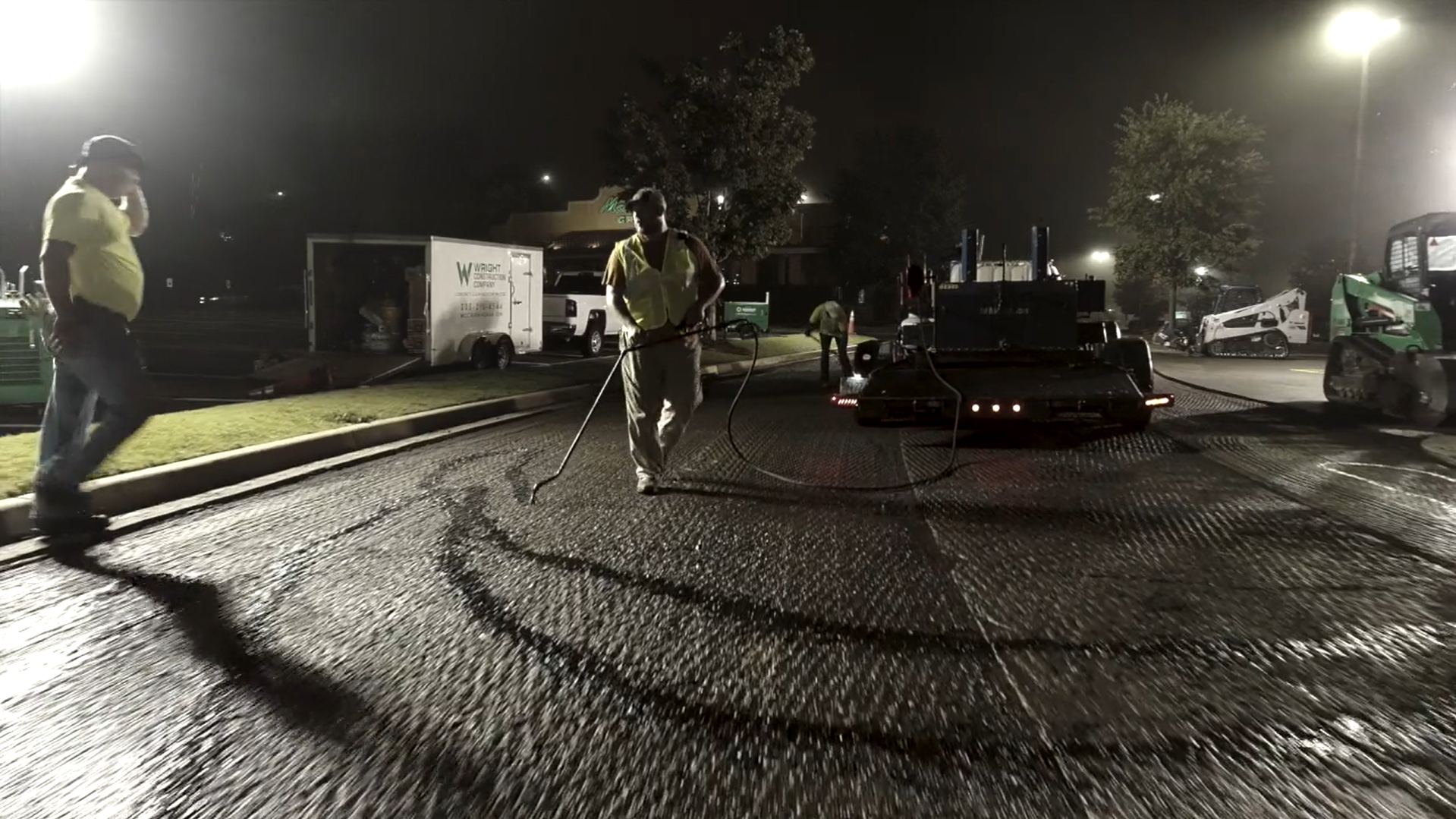
This glossary covers the essential asphalt paving terms that Nashville commercial property owners, facility managers, and general contractors need to know before requesting bids or evaluating proposals. Each definition includes Nashville-specific context, from clay soil challenges and freeze-thaw cycles to TDOT standards and local paving seasons. Knowing these terms helps you ask better questions, compare contractors on equal footing, and avoid costly mistakes.
If you manage a commercial property in Nashville, you will eventually deal with asphalt. Parking lots deteriorate. Truck courts crack under heavy loads. Sealcoat schedules slip, and suddenly you’re staring at a proposal full of terms like “mill and overlay,” “tack coat,” and “subgrade remediation” without a clear sense of what you’re paying for.
This glossary exists to close that gap. It’s organized by project phase rather than alphabetically, so you can follow the logic of how a Nashville asphalt paving contractor actually builds, repairs, and maintains pavement. Every term includes context specific to Middle Tennessee, because Nashville’s climate, soil, and regulatory environment create conditions you won’t find in a generic paving textbook.
Who this is for: Commercial property owners, facility managers, HOA boards overseeing commercial common areas, and general contractors evaluating asphalt subcontractors in the Nashville metro.
Get a quote for Nashville commercial paving
Quick Answer: What Should You Know Before Hiring a Nashville Asphalt Paving Contractor?
Commercial asphalt paving in Nashville requires more than just laying blacktop. The region’s clay-heavy soil, freeze-thaw cycles, heavy rainfall, and summer heat make proper base preparation, drainage, compaction, and mix design critical for long-term pavement performance.
Before hiring a contractor, property owners should understand:
– Whether the existing base has failed
– If milling or full-depth replacement is needed
– How drainage affects pavement lifespan
– What TDOT standards apply
– Which maintenance methods prevent early deterioration
– How asphalt pricing changes based on thickness, traffic loads, and site conditions
For most Nashville commercial properties:
– Asphalt overlay costs range from $1.50–$3.00 per sq ft
– Full replacement ranges from $3.50–$7.00 per sq ft
– Properly maintained pavement lasts 15–30 years
The glossary below explains the key terms, repair methods, costs, and contractor qualifications that matter most in Middle Tennessee commercial paving projects.
Nashville’s Climate and Soil: Why They Shape Every Decision
Before jumping into terminology, it helps to understand what Nashville asphalt is up against. The city sits just north of the Tennessee valley and endures the full spectrum of weather extremes. Summer temperatures regularly reach the high eighties with oppressive humidity, and spring brings nearly six inches of monthly rainfall. Then winter arrives with temperatures that dip below 30°F, freezing moisture trapped inside pavement and creating stress fractures from the inside out.
Nashville also sits on clay-heavy soil. Clay expands when wet and contracts when dry, which puts constant stress on pavement structures. A Nashville asphalt paving contractor who skips soil analysis before starting work is, according to expert guidance on Angi, one of the biggest red flags you can encounter. The interaction between Nashville’s clay subgrade, heavy spring rains, and freeze-thaw cycling means that base preparation and drainage are not optional steps. They are the foundation of every paving decision covered below.
Asphalt Materials and Mix Terms
These are the raw ingredients your contractor will reference in proposals and spec sheets.
Asphalt Concrete (Hot Mix Asphalt / HMA)
Often called simply “asphalt” or “blacktop,” asphalt concrete is a mixture of mineral aggregate and asphalt binder (bitumen) heated to high temperatures and applied to form parking lots, roadways, and truck courts. It is the standard material for commercial paving in Nashville. TDOT specifies particular mix designs for state-funded projects, and reputable contractors use those standards as a baseline even on private work.
Aggregate
The hard, inert mineral material (sand, gravel, crushed stone, or slag) that makes up 92 to 96 percent of an asphalt mix by volume. Aggregate provides structural strength and determines surface texture. Nashville-area contractors typically source limestone aggregate from Middle Tennessee quarries, which performs well under the region’s traffic loads and temperature swings.
Asphalt Binder / Asphalt Cement
A petroleum byproduct that acts as the glue holding aggregate together. Though it comprises only 4 to 8 percent of the pavement mixture, binder grade matters enormously. Tennessee uses Performance Graded (PG) binder specifications calibrated to the state’s temperature range, ensuring the binder stays flexible in winter cold and resistant to softening in summer heat.
Asphalt Emulsion
A combination of water and asphalt material applied as a uniform spray. Emulsions serve as sealing agents for the top layer of pavement and are commonly used in sealcoating and tack coat applications. They cure as the water evaporates, leaving a thin asphalt film.
Cold Mix Asphalt
A pre-mixed asphalt product that does not require heating before application. Cold mix is convenient for temporary pothole repairs and small filling jobs, but it lacks the durability of hot mix. Nashville contractors typically use cold mix as a stopgap measure, with permanent hot mix repairs scheduled during the next paving season.
For a deeper comparison of materials and when each makes sense, see our commercial asphalt paving services guide.
Pavement Structure and Base Terms
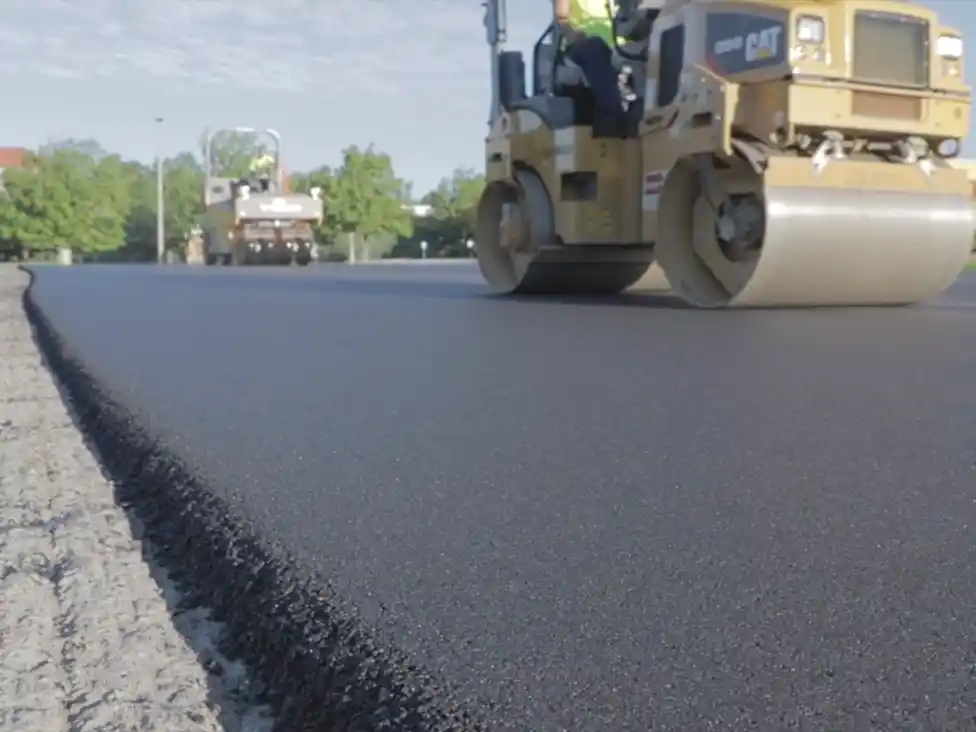
Asphalt pavement is not a single slab. It is a layered system, and each layer serves a specific structural purpose. Understanding this section is critical because base-related failures are the most common (and most expensive) problems Nashville property owners face.
Subgrade
The native soil or compacted fill at the bottom of the pavement system. In Nashville, the subgrade is frequently clay-heavy, which creates drainage problems and instability. A soil analysis before paving tells the contractor whether the subgrade can support the intended traffic loads or needs remediation.
Subgrade Remediation
The process of treating unstable soil beneath a pavement system, typically by excavating poor soil and replacing it with crushed stone base or stabilizing it with cement. Given Nashville’s clay conditions, subgrade remediation is one of the most important line items on a commercial paving proposal. Skipping it to save money almost always costs more in the long run.
Base Course
The layer of material installed between the subgrade and the asphalt surface. It is usually crushed stone (often called “gravel base” or “stone base”) or a recycled asphalt product. The base course provides the finished pavement’s load-bearing capability. An insufficient base is the top reason for pavement failure on commercial projects. For heavy-use areas like truck courts and distribution centers, base thickness can exceed six inches.
Compaction
The process of compressing material into a denser volume using rollers or plate compactors. Proper compaction of both the subgrade and base course is critically important. Without it, you get settlement, low spots where water collects, and premature cracking. Practitioners on HomeAdvisor’s Nashville reviews describe receiving paving work with uneven roller lines, standing water in low spots, and rough areas with boot prints, all symptoms of poor compaction during installation.
Prime Coat
An application of liquid asphalt to an untreated (typically stone) base surface. The prime penetrates into the base, plugs voids, and creates a bond between the base and the first layer of asphalt. It is especially important on Nashville projects where a granular stone base is used over clay subgrade.
Tack Coat
A thin layer of sticky liquid asphalt applied to an existing paved surface before placing a new asphalt layer on top. Tack coat ensures the layers bond together rather than sliding independently. Every overlay project should include a tack coat application.
Full-Depth Asphalt
A pavement system consisting entirely of asphalt layers (no granular stone base), with a total thickness of four inches or more. Commercial lots and roads in Nashville often require four to six inches of asphalt, sometimes with additional binder layers for areas handling heavy truck traffic.
Geotextile
A woven or nonwoven synthetic fabric placed between soil layers or beneath the base course. Geotextiles stabilize soil, improve drainage, and prevent fine clay particles from migrating upward into the stone base. Nashville contractors frequently specify geotextile fabric on sites with especially problematic clay subgrade.
For related guidance on pavement structure and planning, our parking lot construction guide walks through the full process.
Paving Services and Methods
This section covers the actual work a Nashville asphalt paving contractor performs, from new construction to maintenance and repair.
New Asphalt Paving Installation
The complete construction of a new pavement system from subgrade preparation through final surface course. Typical costs for a commercial asphalt parking lot range from $3 to $7 per square foot, with larger projects benefiting from economies of scale. Commercial lots frequently require four to six inches of asphalt over a properly compacted stone base.
Asphalt Overlay
A new layer of asphalt placed directly on top of existing pavement. Overlays work best when the existing base is structurally sound but the surface has deteriorated. Resurfacing with an overlay typically costs $1.50 to $3.00 per square foot, making it significantly cheaper than full-depth replacement. Read more about overlay costs and lifespan.
Asphalt Milling
Also called “cold milling” or “profiling.” A milling machine grinds off the top layer of deteriorated asphalt, removing it without raising the finished grade. The milled material (called millings or RAP) can often be recycled. Milling is almost always the first step in a mill-and-overlay project. For a complete breakdown of the process, see our asphalt milling guide.
Mill and Overlay
The combination of milling off a deteriorated surface and replacing it with fresh asphalt. This is the most common major maintenance procedure for Nashville commercial parking lots and roadways. It restores the surface without disturbing the base course, keeps the finished elevation consistent with existing curbs and drainage structures, and costs less than full reconstruction. Our guide on overlay vs. mill and overlay explains when each approach makes sense.
Sealcoating
A protective coating applied to the asphalt surface to prevent water infiltration, slow oxidation from UV exposure, and resist damage from vehicle fluids. Professional sealcoating costs roughly $0.15 to $0.30 per square foot. In Nashville, sealcoating requires dry weather and mild temperatures, making late spring through early fall the ideal season.
One important note from Nashville contractors: wait six months to a year after new paving before applying the first sealcoat. Sealing too early traps oils in the asphalt and slows the curing process.
Crack Sealing
A method where hot rubberized sealant is applied to active (“working”) cracks to prevent water from reaching the base course. Crack sealing is the single most cost-effective maintenance step a property owner can take, because water intrusion through cracks is what causes base failure and potholes in Nashville’s freeze-thaw climate.
Crack Filling
The placement of asphalt emulsion into dormant (“non-working”) cracks to reduce water infiltration and reinforce adjacent pavement. Crack filling is less durable than crack sealing but appropriate for minor, stable cracks.
Infrared Patching
A repair method where an infrared heater warms the asphalt in a damaged area until it becomes workable again. The contractor then removes deteriorated material, adds fresh hot mix, and compacts the patch. Infrared patching creates a seamless, thermally bonded repair that resists water intrusion better than traditional saw-cut patches. It is particularly cost-effective for isolated failures in otherwise sound pavement.
Full-Depth Patching
Complete removal and replacement of both the asphalt surface and the underlying base in a damaged area. Full-depth patching is necessary when the base has failed, not just the surface. Nashville’s clay soil makes this repair more common than in regions with sandier, better-draining soils.
For a full catalog of repair options, our parking lot repair glossary covers additional methods and decision criteria.
Striping / Pavement Marking
Also known as line painting. The application of traffic control markings including parking stalls, directional arrows, crosswalks, fire lanes, and handicap designations. Nashville commercial properties must follow both ADA federal requirements and local Metro Nashville codes. Faded or missing striping is one of the most common ADA compliance citations. Our ADA-compliant striping guide covers dimensions, costs, and regulatory requirements.
Paving Season in Nashville
The ideal window for asphalt paving in Nashville is late spring through early fall. Summer weather tends to be dry and warm for consecutive days, and longer daylight hours give crews more time to complete large pours. Hot mix asphalt must be placed and compacted at specific temperatures, so cooler months limit the work that can be done effectively. Sealcoating shares the same seasonal window.
Request a seasonal paving estimate
Typical Commercial Asphalt Project Timelines
|
Project Type |
Typical Duration |
|---|---|
|
Sealcoating |
1–2 days |
|
Crack sealing |
1–3 days |
|
Overlay project |
2–5 days |
|
Full-depth replacement |
1–3 weeks |
|
Large industrial paving |
Several weeks |
Recommended Asphalt Maintenance Timeline for Nashville Properties
Commercial asphalt lasts significantly longer when maintenance is proactive rather than reactive.
Typical Maintenance Schedule
|
Pavement Age |
Recommended Maintenance |
|---|---|
|
0–12 months |
Allow asphalt to cure |
|
1 year |
First sealcoat |
|
Every 2–3 years |
Reseal pavement |
|
Annually |
Crack sealing inspection |
|
Every 5–8 years |
Overlay evaluation |
|
15–30 years |
Major rehabilitation or replacement |
Maintenance Priorities for Nashville
Because Nashville experiences heavy rainfall and freeze-thaw cycling, water management should be the top maintenance priority. Small cracks quickly become structural failures once moisture reaches the base layer.
Highest ROI Maintenance Services
-
Crack sealing
-
Drainage correction
-
Sealcoating
-
Catch basin cleaning
-
Preventative overlays
Common Commercial Asphalt Problems in Nashville

Certain pavement failures appear repeatedly across Nashville commercial properties because of the region’s climate, clay soil, and drainage challenges.
The Most Common Issues Include:
-
Alligator cracking from failed subgrade support
-
Rutting in truck lanes and loading areas
-
Standing water caused by improper grading
-
Edge cracking near unsupported pavement edges
-
Potholes from freeze-thaw moisture expansion
-
Oxidation from prolonged UV exposure
-
Drainage failures around catch basins
-
Settlement over poorly compacted fill areas
Why Nashville Properties Fail Faster
Middle Tennessee’s expansive clay soils absorb water during wet periods and shrink during dry conditions. This constant movement stresses the pavement structure from below. Combined with heavy rain events and summer heat, even newer asphalt can deteriorate prematurely if the base and drainage systems are poorly designed.
Warning Signs Property Owners Should Watch For
|
Warning Sign |
Likely Cause |
Typical Solution |
|---|---|---|
|
Spiderweb cracking |
Base failure |
Full-depth patching |
|
Standing water |
Improper grading |
Regrading or drainage correction |
|
Loose gravel |
Surface raveling |
Sealcoating or overlay |
|
Wheel depressions |
Rutting |
Milling and structural repair |
|
Repeated potholes |
Water intrusion |
Base reconstruction |
Pavement Distress and Failure Terms
Knowing what’s wrong with your pavement helps you communicate clearly with contractors and evaluate whether a proposed repair matches the actual problem.
Alligator Cracking
A pattern of interconnected cracks that resembles alligator skin. This indicates fatigue or structural failure in the pavement, usually caused by an inadequate base, excessive loading, or both. Alligator cracking always signals a base-level problem. Surface treatments alone will not fix it. Full-depth patching or reconstruction is the appropriate repair.
Block Cracking
Large, roughly rectangular cracks that form a block pattern across the pavement surface. Block cracking results from age-related shrinkage of the asphalt binder, often accelerated by Nashville’s intense UV exposure and temperature cycling. While visually similar to alligator cracking, block cracks are much larger and typically indicate that the binder has oxidized and lost flexibility.
Rutting
Channeled depressions in the wheel paths where vehicles travel repeatedly. Rutting can result from a weak base, poor compaction, or an asphalt mix that is too soft for Nashville’s summer heat. Truck courts and drive lanes are especially vulnerable.
Raveling
The progressive disintegration of an asphalt surface where individual aggregate particles loosen and dislodge. You will notice loose gravel on the surface and a rough, pitted texture. Raveling often begins after the binder has oxidized, which is why regular sealcoating matters in Nashville’s climate.
Frost Heave
Upward movement of pavement caused by water freezing and expanding beneath the surface. Nashville experiences enough winter freezing to make frost heave a real concern, particularly on pavement with poor drainage or inadequate base depth. Once temperatures drop below 30°F, moisture trapped inside asphalt freezes and expands, resulting in stress fractures and cracks.
Base Failure
When the layer beneath the asphalt surface can no longer support traffic loads or the weight of the pavement structure itself. Causes include water infiltration, overly heavy loads, and poor original design. In Nashville, clay soil that was not properly remediated before paving is a frequent culprit. Base failure typically presents as alligator cracking, potholes, or significant settlement.
Oxidation
The gradual hardening and brittling of asphalt binder caused by exposure to air and UV radiation. Nashville’s long, hot summers accelerate oxidation considerably. Oxidized asphalt turns gray, becomes brittle, and cracks more easily. Sealcoating slows this process.
Site Work and Compliance Terms
Commercial paving projects involve more than just asphalt. These terms cover the surrounding site elements that a Nashville asphalt paving contractor may address as part of a complete project.
ADA Compliance
The Americans with Disabilities Act establishes federal requirements for parking lot and building accessibility, including the number and dimensions of accessible parking spaces, slope requirements for accessible routes, curb ramp specifications, and signage standards. Tennessee commercial properties are subject to both federal ADA requirements and state building codes. Non-compliance can result in lawsuits, fines, and forced remediation.
Curbing
Structures installed at the perimeter of a parking area or along roadways to contain traffic, define edges, and control stormwater flow. Types include asphalt berms, poured-in-place concrete curbs, and pre-cast concrete curbs. Curb and gutter systems are essential for directing water away from pavement, which is especially important given Nashville’s heavy spring rains.
Catch Basin
A curbside or in-pavement inlet covered by a grate that collects stormwater runoff, sediment, and debris from the parking surface. Catch basins connect to underground storm drainage systems. Proper catch basin placement and maintenance prevents standing water, which is one of the fastest ways to destroy asphalt pavement in Nashville.
Bollard
A vertical post (steel, concrete, or flexible) installed to control vehicle and pedestrian traffic. Bollards protect storefronts, utility equipment, and pedestrian areas from vehicle impact. They are commonly placed near building entrances, alleyways, and dumpster enclosures.
Grading
The shaping of the ground surface to establish proper drainage slopes. Every commercial parking lot requires grading that moves water toward catch basins or off the pavement edge. Poor grading leads to ponding, which accelerates every form of pavement distress listed above.
Light Pole Base
A concrete foundation installed to support parking lot light poles. These are typically poured as part of new construction or site renovation projects and must be coordinated with the paving schedule.
Dumpster Pad
A reinforced concrete slab designed to support the weight of loaded dumpsters and refuse trucks. Dumpster pads are almost always concrete rather than asphalt because asphalt deforms under the concentrated point loads from dumpster wheels and truck stabilizers.
Nashville and Tennessee-Specific Terms
These terms are unique to working in Tennessee and the Nashville metro area. They come up frequently in bid documents, municipal specifications, and contractor qualification reviews.
TDOT Prequalification
An approval process administered by the Tennessee Department of Transportation that certifies a contractor’s financial capacity, equipment, experience, and safety record for state-funded projects. TDOT prequalification is not required for private commercial work, but it is a strong indicator that a contractor meets rigorous standards. When evaluating a Nashville asphalt paving contractor, TDOT prequalification is one of the most meaningful credentials to verify.
NDOT (Nashville DOT) Standards
Metro Nashville’s Department of Transportation maintains local specifications for pavement repair and construction within Davidson County. These standards govern work performed on public rights-of-way and are referenced in Metro Nashville’s pavement repair specifications. Contractors working on Nashville commercial properties adjacent to public roads often need to comply with NDOT requirements for tie-ins and transitions.
Overall Condition Index (OCI)
The scoring system Metro Nashville uses to evaluate road conditions across Davidson County. The OCI rates every road section on a numerical scale that factors in cracking, rutting, roughness, and other distress indicators. While OCI is primarily a municipal tool, understanding it helps property owners benchmark the condition of their own pavement against city standards.
Fog Seal (PASS)
A polymer-modified asphalt surface sealer applied as a light spray to rejuvenate and seal worn asphalt surfaces. PASS (Polymer-modified Asphalt Surface Sealer) is a newer treatment that Nashville-area contractors use as an alternative to traditional sealcoating on surfaces that are still in fair condition but showing early signs of oxidation.
PG Binder Grade
Performance Grade, the system used to classify asphalt binders based on the temperature range they must perform within. Tennessee’s climate requires binder grades that remain flexible in winter cold and resist deformation in summer heat. The specific PG grade should appear in project specifications, and a knowledgeable Nashville asphalt paving contractor will specify the appropriate grade without being asked.
Cost Benchmarks for Nashville Commercial Projects
Exact pricing depends on project scope, site conditions, and current material costs. These ranges provide a useful framework for budget planning:
|
Service |
Typical Cost Range |
|---|---|
|
New asphalt parking lot |
$3.00 to $7.00 per sq ft |
|
Parking lot repaving (full) |
$3.50 to $6.50 per sq ft |
|
Resurfacing / overlay |
$1.50 to $3.00 per sq ft |
|
Sealcoating |
$0.15 to $0.30 per sq ft |
|
Re-mobilization (split schedules) |
$7,000 to $20,000 per occurrence |
Larger projects benefit from economies of scale. A 200,000 square foot parking lot will cost less per square foot than a 20,000 square foot lot. Re-mobilization charges apply when a project is split across multiple phases, so consolidating work into a single mobilization saves significant money.
Properly installed and maintained asphalt pavement lasts 15 to 30 years. That lifespan varies based on climate exposure, traffic volume, maintenance consistency, and installation quality. Nashville’s aggressive climate pushes pavement toward the shorter end of that range without proactive maintenance.
For a broader look at costs and best practices, our parking lot paving glossary includes additional benchmarks.
How to Compare Commercial Asphalt Paving Proposals
Many commercial property owners compare paving bids based only on price. That often leads to premature pavement failure because lower bids may exclude critical structural work.
Items Every Proposal Should Include
|
Proposal Item |
Why It Matters |
|---|---|
|
Pavement thickness |
Determines load capacity |
|
Base repair scope |
Prevents future settlement |
|
Tack coat application |
Ensures asphalt layer bonding |
|
Compaction specification |
Reduces rutting and failure |
|
Drainage corrections |
Prevents water damage |
|
Traffic control plan |
Minimizes operational disruption |
|
Warranty terms |
Clarifies contractor accountability |
|
ADA compliance scope |
Avoids code violations |
What to Look for in a Nashville Asphalt Paving Contractor
With the terminology covered, here is what separates a qualified Nashville asphalt paving contractor from one who will leave you with problems.
Commercial project experience. Practitioners on contractor forums consistently warn against hiring residential driveway contractors for commercial work. The equipment, mix designs, base requirements, and traffic engineering are fundamentally different. Ask for references from parking lots, truck courts, or roadways comparable in size and use to your project.
TDOT prequalification. This credential means Tennessee’s DOT has vetted the contractor’s financials, equipment, experience, and safety record. It is not a guarantee of quality, but it eliminates contractors who cannot meet a meaningful baseline.
Self-performing crews. Contractors who self-perform with their own crews and equipment maintain tighter quality control than those who subcontract the actual paving work. Ask directly whether the company’s own employees will operate the pavers and rollers.
Soil analysis. Any Nashville asphalt paving contractor who does not perform or require a soil analysis before quoting a new construction project is either cutting corners or unfamiliar with local conditions. Nashville’s clay soil demands specific base preparation.
Multi-trade capability. Commercial paving projects frequently involve concrete curbing, drainage work, ADA improvements, and striping in addition to asphalt. A contractor who handles multiple trades reduces coordination overhead and schedule risk.
Understanding of Nashville climate cycles. The contractor should proactively discuss how freeze-thaw, summer heat, and spring rainfall affect the proposed pavement design and maintenance schedule. If they don’t bring it up, ask.
Transparent scheduling. Reputable contractors explain paving season constraints and mobilization logistics upfront. According to community discussions, you should avoid contractors who are pushy, try to get you to sign on the spot, or play pricing games with vague scope descriptions.
Wright Construction operates a Nashville office with local crews, holds TDOT prequalification, self-performs across asphalt paving, concrete, site work, and ADA compliance, and focuses exclusively on commercial and industrial projects.
Contact Wright Construction for Nashville commercial paving
Frequently Asked Questions
What is the best time of year to pave a parking lot in Nashville?
Late spring through early fall. Nashville’s summer weather provides the consecutive dry, warm days that hot mix asphalt requires for proper placement and compaction. Sealcoating follows the same seasonal window. Most Nashville asphalt paving contractors book their schedules months ahead, so requesting estimates in late winter or early spring is wise.
How long does a commercial asphalt parking lot last in Nashville?
With proper installation and regular maintenance, 15 to 30 years. Nashville’s combination of heat, humidity, heavy spring rain, and winter freezing pushes pavement harder than milder climates. Properties that follow a consistent sealcoating, crack sealing, and drainage maintenance schedule will reach the upper end of that range.
Why does Nashville’s clay soil matter for asphalt paving?
Clay expands when wet and contracts when dry, creating constant movement beneath the pavement. Without proper subgrade analysis and base preparation (often including geotextile fabric and deeper stone base), the pavement will crack and settle prematurely. A contractor who skips soil analysis in Nashville is a major red flag.
How much does it cost to repave a commercial parking lot in Nashville?
Full repaving typically runs $3.50 to $6.50 per square foot. Resurfacing with an overlay is cheaper at $1.50 to $3.00 per square foot. The right approach depends on the condition of the existing base. If the base has failed, an overlay alone will not solve the problem.
What is the difference between crack sealing and crack filling?
Crack sealing uses hot rubberized sealant on active cracks that expand and contract with temperature changes. Crack filling uses asphalt emulsion on stable, dormant cracks. Crack sealing is more durable and appropriate for Nashville’s freeze-thaw conditions, where cracks are almost always working.
Should I sealcoat new asphalt right away?
No. Nashville contractors recommend waiting six months to a year before the first sealcoat application. Fresh asphalt contains volatile oils that need time to evaporate and cure. Sealing too early traps those oils, which can soften the surface and delay proper hardening. The first sealcoat is best applied in spring or fall after the waiting period.
What does TDOT prequalification mean for a paving contractor?
It means the Tennessee Department of Transportation has verified the contractor’s financial stability, equipment inventory, project experience, and safety record. While TDOT prequalification is required only for state-funded work, it serves as a reliable quality indicator for any commercial project. Not all Nashville asphalt paving contractors carry this credential.
What is the difference between a mill and overlay and a full-depth replacement?
A mill and overlay removes only the deteriorated surface layer and replaces it with fresh asphalt, leaving the existing base intact. Full-depth replacement removes everything, including the base, and rebuilds from the subgrade up. Mill and overlay is appropriate when the base is still structurally sound. Full-depth replacement is necessary when the base has failed, which is common on older Nashville properties with original clay subgrade that was never properly remediated.