Getting concrete right on a commercial or industrial project isn’t about luck. It’s about science. The long term strength, durability, and cost effectiveness of a concrete slab, foundation, or wall all come down to a single, critical blueprint: the mix design. A...
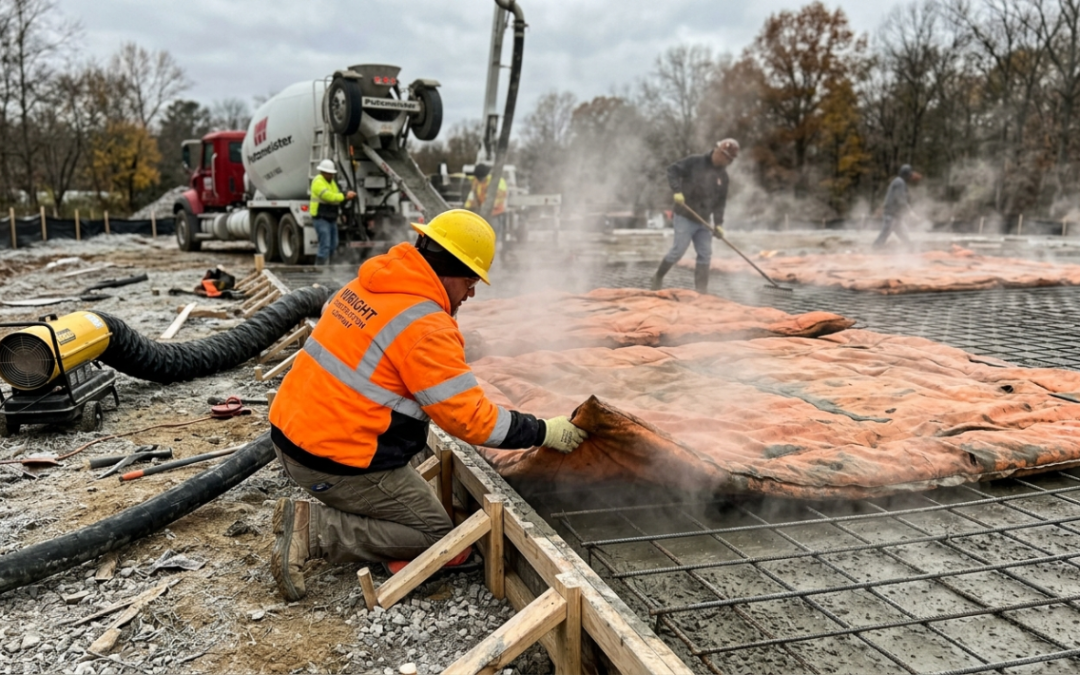
When the temperature drops, the challenges for construction rise. For commercial and industrial projects, a sudden cold snap can put concrete work at serious risk. Pouring concrete in cold weather isn’t just about working in chilly conditions; it’s about preventing...
Pouring concrete on a hot, sunny day seems ideal, but for commercial projects, it introduces serious risks. High temperatures, low humidity, and wind can wreak havoc on fresh concrete, causing it to set too fast and lose water too quickly. This can lead to cracks,...
When you look at a large commercial concrete floor, like one in a massive warehouse or a new retail store, you probably see a simple, flat, grey surface. But for the engineers, builders, and facility managers involved, that surface is anything but simple. The precise...
Ever walked across a concrete floor and felt subtle bumps or noticed a slight slope? In most cases, it’s no big deal. But for a high traffic warehouse, a manufacturing plant, or a television studio, the exact flatness and levelness of the concrete slab is absolutely...
Concrete is incredibly strong when you squeeze it (compression), but it’s surprisingly weak when you try to pull it apart (tension). That’s where reinforcement comes in. By embedding other materials within the concrete, we give it the tensile strength it needs to...