
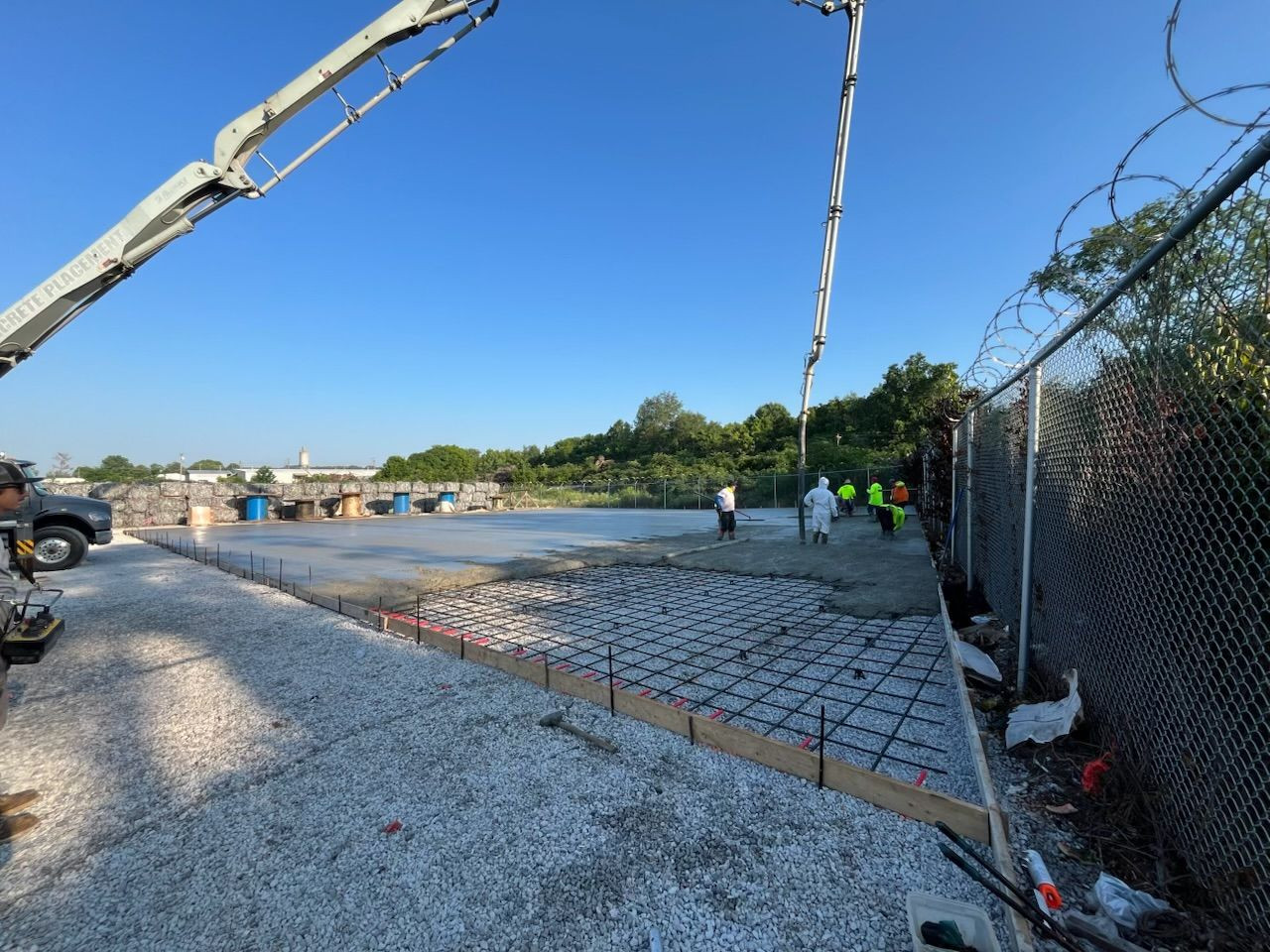
The commercial concrete construction process is a multi-stage journey that transforms raw materials into a durable structure, encompassing everything from pre-construction planning and site preparation to foundation work, pouring, finishing, and quality control. Building a durable commercial structure starts from the ground up, and the success of any project hinges on executing this process flawlessly. This guide breaks down the entire journey, giving you a clear picture of what it takes to turn a plan into a solid, lasting reality.
Quick Takeaway: The Commercial Concrete Process at a Glance
The commercial concrete construction process is a 4-phase workflow: Pre-construction (soil testing/permitting), Earthwork (excavation/formwork), The Pour (placement/consolidation), and Curing/Quality Control. On average, a commercial slab reaches 70% structural strength within 7 days, though full curing takes 28 days.
Key 2026 Success Factor: Integrating under-slab utilities and digital moisture monitoring are now standard to meet modern efficiency and ESG sustainability mandates.
Part 1: Pre-Construction and Site Preparation
Before a single shovel hits the dirt, a tremendous amount of planning goes into setting the stage. This initial phase of the commercial concrete construction process is all about mitigating risks and creating a solid foundation for everything that follows. For the complete pre-construction roadmap—covering scope definition, feasibility studies, contractor vetting, permitting, and budget contingencies across 22 planning steps—see our commercial concrete project planning checklist.
Site Selection
Choosing a location is more than just finding an empty lot. It involves a deep dive into factors like soil conditions, accessibility, local zoning laws, and infrastructure. A smart site choice can save a project from hidden costs down the road. For instance, a cheap parcel of land might lead to higher operating costs if it’s too far from suppliers. A thorough site evaluation can prevent major headaches. For example, Subsurface utility engineering may reduce project delivery time by as much as 20 percent.
Soil Testing
What lies beneath the surface is just as important as the structure itself. Soil testing, or a geotechnical investigation, analyzes the ground to see if it can support the planned building. Engineers take soil samples to measure strength, density, and moisture content. This data is essential for designing a stable foundation. Overlooking this step can lead to catastrophic failures, while getting it right helps extend the building’s lifespan.
Building Code Compliance
Every construction project must follow a long list of building codes and safety regulations. These rules cover everything from structural strength and fire protection to energy efficiency and accessibility. Following them isn’t just about avoiding fines, although those can be substantial. A recent audit in New York City uncovered $2.6 million in fines across just ten buildings. More importantly, modern building codes save lives and reduce property damage when they are properly enforced. This includes meeting requirements from the Americans with Disabilities Act (ADA) (see how ADA compliance affects paving projects) to ensure accessibility is built in from the start.
Site Clearing and Grading
With the planning complete, the physical work begins. Site clearing involves removing trees, old structures, and any other obstacles to create a clean slate. Next comes grading, which means shaping the land to the exact elevations and slopes needed for the project. Proper grading is vital for drainage. A common guideline is to slope the ground away from the foundation at least 0.5 inches per foot for the first 10 feet to keep water from pooling against the structure.
Drainage Planning
Managing water is a huge part of a successful build. Drainage planning involves designing systems to control rainfall and runoff, protecting the building and pavement from water damage. This can include storm drains, underground pipes, and retention ponds; here’s how a good paving company mitigates drainage issues. A core principle is to keep water away from the foundation, as even the best waterproofing isn’t foolproof. The single best defense against water intrusion is preventing the surrounding soil from becoming saturated in the first place.
Soil Stabilization
Sometimes, the natural soil on a site isn’t strong enough to support a large commercial building. When that happens, soil stabilization techniques are used to improve its strength. This might involve mixing additives like lime or cement into the soil to create a more solid base. This is especially common in areas with expansive clay soils, which can swell and shrink with moisture, causing foundation cracks. Stabilizing the soil is often more cost effective than hauling in tons of replacement fill.
Phase | Key Activity | Quality Benchmark | Typical Duration |
I: Planning | Geotechnical Soil Report | Min. allowable soil bearing pressure met | 2–4 Weeks |
II: Prep | Grading & Drainage | 0.5″ per foot slope away from foundation | 1–2 Weeks |
III: Setup | Formwork & Rebar | Steel clearance/spacing per ASTM standards | 1 Week |
IV: Execution | Placement & Finishing | Slump test & Air content verification | 1–2 Days |
V: Curing | Hydration Management | 50% strength increase via moisture retention | 7–28 Days |
Part 2: Laying the Groundwork for the Structure
Once the site is fully prepped, the focus shifts to creating the bones of the building. This stage of the commercial concrete construction process is where the structure truly begins to take shape.
Ground Excavation
Excavation is the process of digging out earth for foundations, basements, and utility lines. Safety is paramount here, as a cubic yard of soil can weigh more than 2,000 pounds. For any excavation 5 feet or greater in depth, OSHA requires a protective system. Precision is also key to ensure the foundation is placed at the correct depth and on solid ground.
Foundation Design
The foundation is what transfers the building’s weight safely to the ground. For decision-makers, our commercial concrete foundations owner’s guide covers types, costs, and design basics. There are two main types: shallow foundations (like spread footings and slabs) and deep foundations (like piles or caissons) that reach more stable ground deeper down. For many projects, a slab on grade is common (see our slab on grade construction guide). A solid foundation design ensures the building will sit right for decades without settling or cracking. Even for a school project, a foundation can be a massive undertaking, with one requiring 1,700 cubic yards of concrete for the foundation.
Footing Installation
Footings are the wide bases at the bottom of the foundation that spread the load over a larger area of soil. The installation process involves digging trenches to the specified depth, placing a grid of steel reinforcement bars (rebar), and pouring concrete. These footings serve as the rock solid pedestal on which the rest of the structure is built.
Formwork Installation
For walls, columns, and slabs, temporary molds called formwork are built to hold wet concrete in the desired shape. Formwork must be incredibly strong, as wet concrete exerts immense pressure. A weak form can bulge or burst, causing a dangerous and costly failure. In fact, formwork can account for 35% to 60% of the cost of a concrete structure, so efficient, reusable systems are common on commercial jobs.
Reinforcement Placement

Concrete is strong under compression but needs help with tension. That’s where steel reinforcement comes in. Placing rebar or wire mesh inside the formwork gives the concrete the tensile strength it needs to resist bending and cracking. On large floor plates, post-tensioned slabs are another way to control deflection and cracking. The placement must be precise, with the correct spacing and coverage of concrete to protect the steel from corrosion.
Under Slab Utility Integration
Before a concrete slab is poured, all necessary utility lines like plumbing, electrical conduits, and drains must be installed underneath it. This requires careful coordination to ensure pipes and conduits stub up in the exact right locations for future fixtures and equipment. Getting this right avoids the messy and expensive job of cutting into a brand new concrete floor later.
Part 3: The Pour and Finishing Touches
This is the most visible and often most exciting part of the commercial concrete construction process. It’s where the liquid stone is placed, shaped, and transformed into a permanent, functional surface.
Concrete Mix Design
Concrete isn’t a one size fits all material. A concrete mix design is like a recipe, tailored to achieve specific properties for strength, workability, and durability. The key ingredients are cement, water, aggregates (sand and stone), and chemical admixtures. The water to cement ratio is particularly important, as a lower ratio generally leads to stronger concrete. The mix design ensures the final product will perform exactly as needed.
Sustainable Mix Designs and Environmental Compliance
In 2026, commercial procurement often requires documentation of a project’s environmental footprint. Modern concrete contractors now utilize:
Supplementary Cementitious Materials (SCMs): Using fly ash or slag to reduce the carbon intensity of the mix.
Recycled Aggregates: Utilizing crushed diverted concrete to meet LEED requirements.
Carbon Sequestration Technologies: Methods that mineralize emissions within the concrete itself to improve compressive strength while reducing the environmental impact.
Concrete Placement
Once the concrete arrives on site in a mixer truck, it has to be placed quickly, within 90 minutes after the water and cement have made contact with each other. Crews use chutes, pumps, or buggies to get the concrete into the forms. The goal is to place it as close to its final position as possible to avoid segregation, where the heavy aggregates separate from the cement paste. A continuous pour is crucial to avoid weak “cold joints” between batches.
Consolidation and Compaction
After pouring, the concrete contains trapped air pockets. Consolidation, usually done with a mechanical vibrator, removes these voids and helps the concrete settle tightly around the rebar. Just a 2% increase in trapped air can reduce concrete strength by 10%, so this step is critical. Separately, the soil and stone base beneath the slab must also be compacted to prevent future settlement.
Surface Finishing
Finishing gives the concrete surface its final look and texture. This multi stage process can include:
Screeding: Leveling the concrete.
Floating: Smoothing the surface and pushing aggregates down.
Troweling: Creating a very smooth, dense surface for indoor floors.
Brooming: Creating a textured, slip resistant surface for outdoor pavement.
Timing is everything. Finishing too early can weaken the surface, while waiting too long makes the concrete too hard to work with. If you’re weighing options for floors, our commercial concrete floor systems guide explains performance tradeoffs.
Curing
Curing is the process of keeping newly placed concrete moist and at a stable temperature for several days. This allows the chemical reaction of hydration to continue, which is how concrete gains its strength. Properly cured concrete can be nearly 50% stronger than concrete left to dry out too quickly. Methods include water misting, covering with wet burlap, or applying a chemical curing compound.
Part 4: Ensuring Long Term Quality
The job isn’t done when the concrete is hard. The final phase of the commercial concrete construction process involves verification, control, and applying lessons learned to ensure the structure lasts a lifetime.
Quality Control and Inspection

Throughout the commercial concrete construction process, a rigorous quality control program is in place. This includes inspecting rebar placement before a pour, testing samples of fresh concrete for slump (workability) and air content, and casting test cylinders. These cylinders are later crushed in a lab to verify the concrete achieved its specified compressive strength.
Defect Prevention and Crack Control
All concrete has a tendency to shrink and crack as it dries. The goal is to control where and how it cracks. This is done by adding control joints, which are pre planned lines that encourage cracks to form in a straight, manageable way. Reinforcement like rebar and wire mesh also helps hold any cracks tightly together. Proper curing is another key strategy to minimize surface cracking.
Best Practices for the Commercial Concrete Construction Process
Successful projects are built on a foundation of proven best practices. This means thorough upfront planning, strict adherence to building codes, using high quality materials, and employing skilled craftspeople. It also means coordinating trades effectively to avoid rework, like ensuring all under slab utilities are installed before the concrete is poured. Companies that follow these principles deliver higher quality work that stands the test of time.
Partner with an Expert in Commercial Concrete
Navigating the commercial concrete construction process requires expertise, precision, and a commitment to quality. From industrial foundations in Alabama to large scale paving projects in Tennessee, a seasoned contractor makes all the difference.
If your next project demands a partner who understands every phase of construction, from soil stabilization to ADA compliance, consider a team with a proven track record across the Southeast. Before you shortlist bidders, review our structural concrete contractor guide for what to expect and how to vet expertise. For a project built right from the ground up, contact Wright Construction Company to put their expertise to work for you.
Frequently Asked Questions
1. How long does the commercial concrete construction process take?
The timeline varies greatly depending on the project’s size, complexity, and weather conditions. A small foundation might take a few weeks, while a large industrial slab or multi story structure can take many months from site prep to final curing.
2. Why is soil testing so important before starting construction?
Soil testing determines the ground’s ability to support the structure. Without it, you could build on weak or unstable soil, leading to foundation settlement, structural cracks, or even failure. It’s a critical risk management step.
3. What is the difference between a control joint and an expansion joint?
A control joint is a shallow cut or groove made in a slab to control where shrinkage cracks occur. An expansion joint is a complete separation between adjacent concrete sections, filled with a flexible material, to accommodate movement from temperature changes.
4. How soon can you walk on or drive on new concrete?
For foot traffic, you can typically walk on new concrete after 24 to 48 hours. For vehicle traffic, you should wait at least 7 days, as concrete reaches about 70% of its strength in the first week; learn more in our guide on how long concrete takes to dry and why waiting matters.
5. What causes cracks in new concrete?
The most common cause is drying shrinkage. As water evaporates from the mix, the concrete shrinks, creating internal stress that is relieved by cracking. Other causes can include rapid drying from sun and wind, ground settlement, or overloading the slab before it’s fully cured.
6. Is reinforcement required in all commercial concrete slabs?
While not every single piece of flatwork requires it, most structural slabs, foundations, and pavements in a commercial concrete construction process use reinforcement (like rebar or wire mesh) to control cracking and add tensile strength.
7. How does weather affect the concrete construction process?
Extreme weather poses challenges. Hot, windy days can cause concrete to dry too quickly, leading to surface cracks. Cold weather can slow down the curing process and freezing temperatures can permanently damage fresh concrete. Experienced contractors use techniques like admixtures, insulated blankets, and careful scheduling to manage weather impacts.
8. What does ADA compliance involve for concrete work?
For concrete contractors, ADA compliance typically involves constructing accessible ramps with the correct slope, installing detectable warning surfaces at curb cuts, creating compliant parking spaces, and ensuring sidewalks and pathways are free of barriers. You can learn more about how an experienced contractor handles these requirements by visiting the experts at Wright Construction Company.